• Skip to main content
Bridgeway

Academy and Therapy Center

  • Who We Are
    • Organizational Leadership
    • Bridgeway Value Awards
    • Testimonials
    • Community Partnerships
    • FAQs
    • Contact Us
    • News
  • Events
    • Bridgeway Golf Scramble
    • AmazeAbility: 20 Years of Possibility!
  • Make a Difference
    • Scholarship Granting Organization
    • Donate to Bridgeway
    • Planned Giving
    • Amazon Wishlists
    • Champions, Heroes and Superheroes
    • Bridge Builder Awards
    • Volunteer Opportunities
  • For Parents
    • Prospective Parents
    • Attendance Form
    • Wait List
    • Enrollment Application
    • Autism Scholarship & Other Funding Opportunities
    • Current Parents/PTA
    • Resources
    • Calendar
  • Blog
  • We’re Hiring
  • Bridgeway Academy
    • Preschool Program
    • Peer Model Program
    • Elementary
    • Academic Program
    • Applied Program
    • Life and Vocational Skills
    • B.R.I.D.G.E. To Adulthood
    • Summer Program
    • Before/After Care
  • Bridgeway Therapy Center
    • AAC Evaluation Center
    • Family Partnership & Crisis Stabilization
    • Clinical ABA
    • Music Therapy
    • Occupational Therapy
    • Physical Therapy
    • Mental Health & Psychology
    • Speech Therapy
  • Donate

Uncategorized

Nov 10 2017

We Are Thankful

By Janelle Maur and Students from Team K

As we near the Thanksgiving and Holiday season, it’s important to take a moment out of the daily routine to pause and think about thankfulness. As part of this, we asked some of our students at the Secondary School & Therapy Center to think about what they’re thankful for. Here’s some of what Team K is thankful for, in their own words:
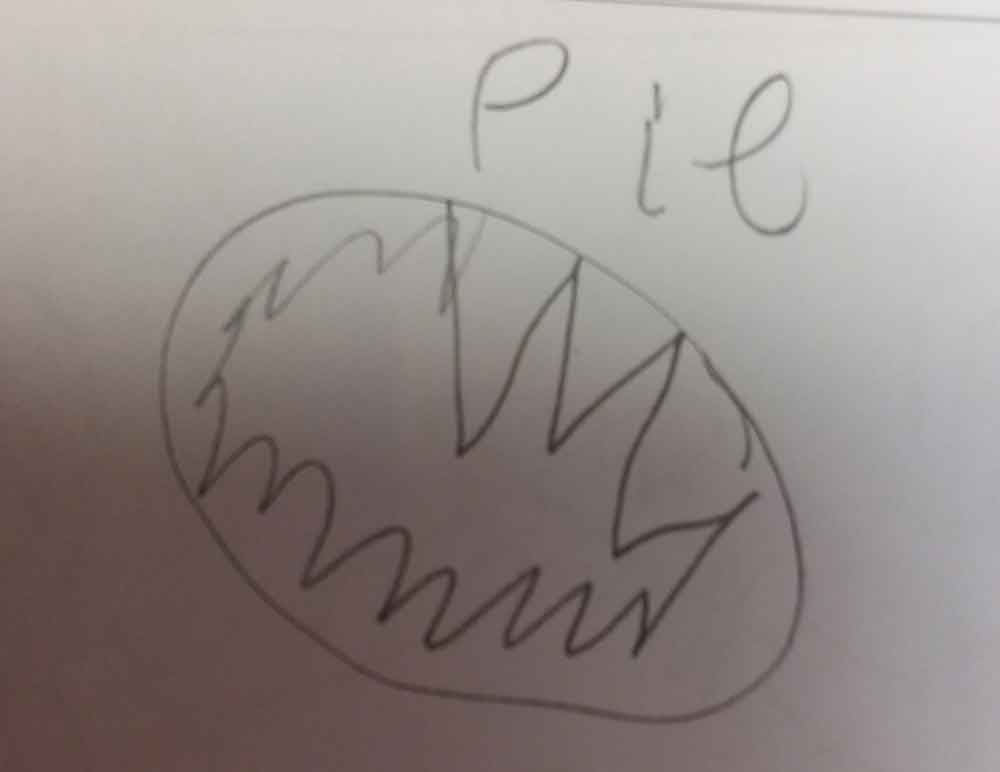
I am thankful for mom.
I am thankful for Fall and leaves.

 I am thankful for pumpkin pie and food.
I am thankful for my family.
I am thankful for my brothers and sister.  

I am thankful for my parents.
I am thankful for my roof so I don’t get wet.
I am thankful for my dogs.

I am thankful for my friends, my family, my teachers, my classmates, my food, my parents/grandparents/caretaker, my water, my strategies that I can use, etc. The reason I am thankful for all that stuff is because I get provided. I get to drink that water I get to eat that food I get taught I am not the only one in the class I have people who have stuff in common with me etc. The reason I get provided, fed, and all of that stuff I am thankful for is because the people I get taken care of by care about me.

I am thankful for Squanto once he told the Pilgrims how to survive in their new home. I am thankful for the family football game. I am thankful for the family I have, even when I want another dog.

Yaya is playing a game called Minecraft. I am thankful for Yaya.
Me and Yaya are playing Minecraft in the game. Play with Yaya and me. Play games.

I am thankful for my family.
I am thankful for food.
I am thankful for friends and nice teachers. 

Thank you every body.
I am thankful for everything you all give me.
I am thankful for all of your help and I am thankful for you all caring about me.
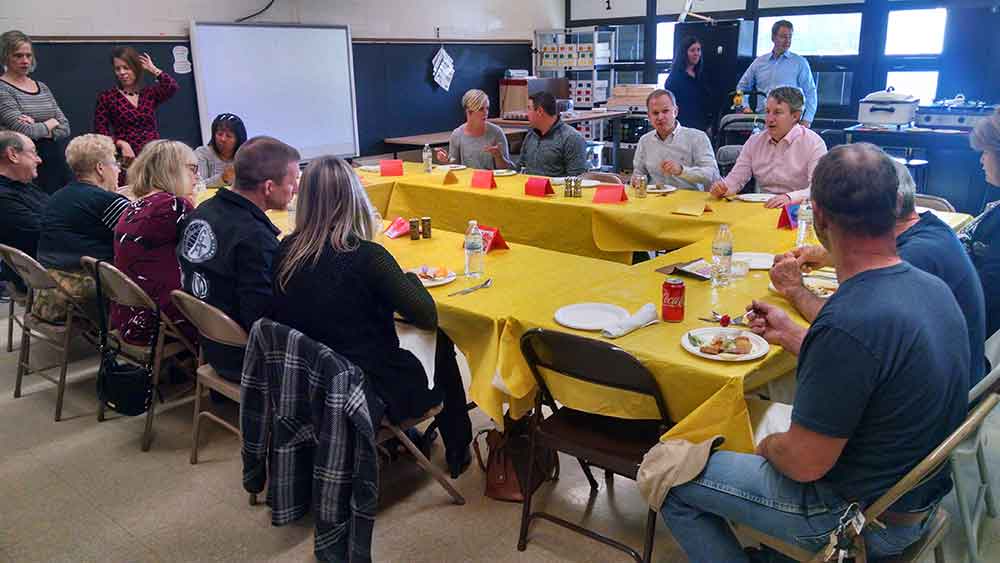
We also welcomed our Hero and Superhero donors to the Secondary School and Therapy Center on Thursday, November 9th for our annual Thanksgiving Luncheon. The Luncheon took place in the Vocational Skills Center, and students from Team Somers, Team Blackburn, and Team Walker even helped prepare and/or serve the meal. It was a great way to thank our donors for their support and provide life and vocational skills training for our students at the same time. Donors were also treated to a musical performance of classic rock songs from students from Team Stefanik, accompanied by Music Therapist, Liz Woolley.

Lastly, on behalf of the students and staff, we are thankful for YOU, our wonderful, AMAZING and supportive Bridgeway Academy community. Thank you for all you do throughout the year to help our students and clients reach their highest potential.

As we approach the end of the calendar year, we are asking for your financial support. If you recently made a donation to Bridgeway Academy during The Big Give, we are thankful. If you’ve never made a contribution to Bridgeway Academy, please consider a donation of any amount today. If you are still planning your year-end giving, we ask you to generously support Bridgeway Academy. Tax-deductible gifts of any amount can be made right now at https://bridgewayohio.org/make-a-difference/donate-to-bridgeway-academy/. Thank you in advance for your support.
Written by alex · Categorized: Uncategorized

Nov 06 2017

Globalizing Autism Advocacy: My Upcoming Work in India as a Skilled Volunteer

By Stephanie Keyser, M.A., BCBA, COBA

My vision is simple: Promote the acceptance, education, and autonomy of individuals who may need support advocating for these rights on their own.

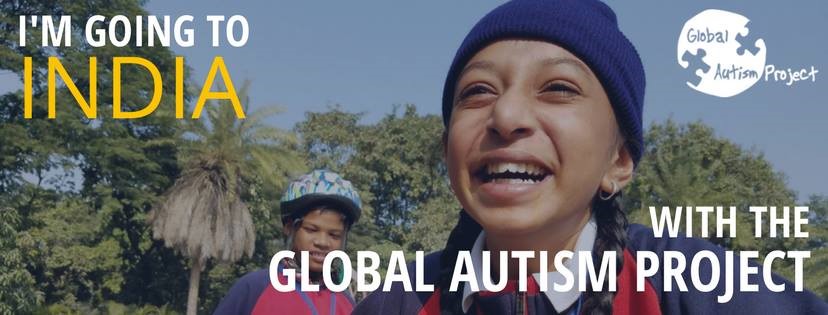
I am lucky be provided with the opportunity to live this mission daily through my work at Bridgeway Academy, and am thrilled to soon be able to extend that support on a global level, as a SkillCorps volunteer through the Global Autism Project! The mission of the Global Autism Project is to promote the acceptance and integration of individuals with autism worldwide, by training local communities in culturally-relevant, sustainable practices.

This February, along with other skilled volunteers, I will be traveling to Chandigarh, India, to train teachers in the use of evidence-based practices, in order to support the educational needs of students with autism. Together with the teachers and staff at SOREM (an educational center for individuals with autism and other developmental disabilities), the SkillCorps volunteers will help to create sustainable programming, which will be used to support students long after the team departs.

I am continually humbled by my work and experiences with families in the Columbus community, and am reminded daily of the capacity all children have for learning – especially when provided with the appropriate support. I am so excited for the opportunity to support, connect with, and learn from the local community in Chandigarh, and to further expand my cultural reach through this experience.

I look forward to sharing my journey with you! 

If you’d like to learn more about how you can support Stephanie’s work with the Global Autism Project, click here.

Written by alex · Categorized: Uncategorized

Oct 20 2017

How ‘Out’ Changed Everything: A Journey Through Speech Therapy

By:  Cassie Wilhelm, MA, CCC-SLP, Speech-Language Pathologist

In June 2015, Blake came to Bridgeway Academy with his mother and little brother to begin Speech-Language Therapy at our Therapy Center.  The family had driven over an hour to come to therapy.  From the very beginning, Blake was interactive and socially-driven.  He was using some signs and could make a ‘b’ or ‘m’ sound. His gestures, vocalizations and joint attention communicated meaning about his environment, and although he had a minimal expressive verbal vocabulary, he was commenting, asking questions and able to request assistance.

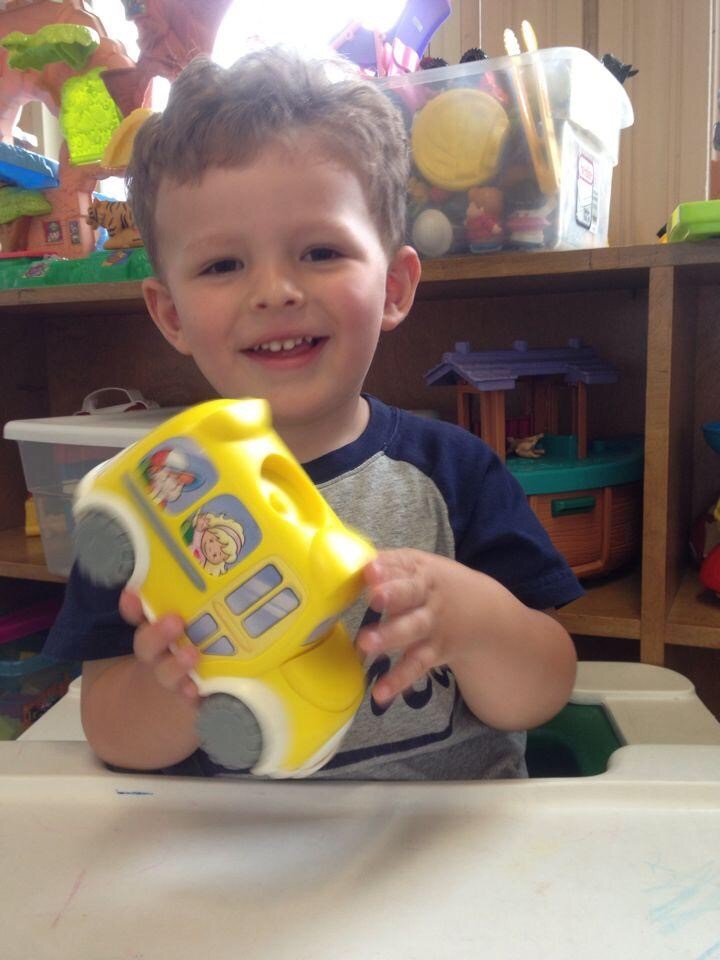
In time, Blake was soon running for hugs in the waiting room, had learned our routine (we always get a truck or a bus before heading to my therapy room), and loved “practicing” sentences.  However, his speech progress was initially slow.  Over the first six months, Blake had not made significant progress with verbal sound production.

That began to change in January of 2016, when he said the word “out” in therapy while playing with a puzzle.  The production was labored and disconnected between the vowels and the consonant, but he did it!  We celebrated and I reinforced what “out” meant for our activity: “take out the pieces.”  Within weeks, he was saying “out” to request leaving the treatment room, to go outside, and to again take out the puzzle pieces.

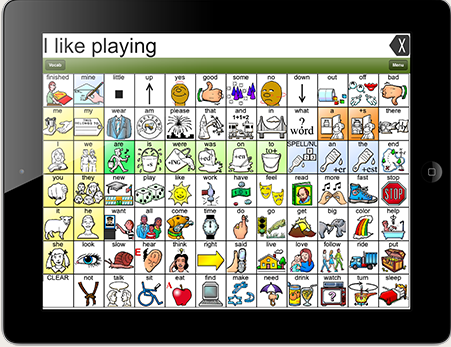
Even with the acquisition of “out”, Blake still couldn’t verbally say many of his favorite things, which were often transportation-related including “garage” and “helicopter.”  As part of his therapy, we trialed the LAMP (Language Acquisition through Motor Planning) Words for Life application on a speech department iPad many times during his first 8 months with us.  Our focus was verbal speech production, as Blake knew so many words that he couldn’t produce verbally.  During these trials with LAMP, Blake showed great promise.  He understood cause and effect and understood that what he said on LAMP was relevant and meaningful.  In April of 2016, I recommended that the family purchase the LAMP Words for Life application to use at home on an existing family iPad.  Blake’s mother, Brooke, was agreeable to this plan, and we had many conversations about continuing to work on verbal speech, because the access to immediate functional communication was important for Blake to feel successful, and for him to want to continue to work hard.

For about 3 months, Blake consistently brought his iPad with LAMP to therapy.  He was using it at home and his mother and I were discussing how to get his school on-board and educated about LAMP for the fall, when he would be going back to pre-school.  He was combining words on LAMP or sequentially with verbal speech, by saying one word verbally followed by one word on LAMP. His word combinations were fluid, novel and meaningful.

Up to this point, “out” had been our first big verbal speech success, but remained one of the only.  LAMP was proving to be a good option for Blake, providing him a way to communicate through the device – but then something special happened.

Something clicked for Blake and his world changed.  His language exploded. I think it was the perfect storm for his stage of development: motivation, parental involvement (including Grandma Sharon who drove over an hour every week!), his relationship with me, and a holistic treatment approach that targeted words that Blake could use across environments and for a variety of functions.

It has now been over two years since we began working with Blake.  He’s now using lengthy sentences, up to 7-8 words, and has developed many age-appropriate sounds., and is attending kindergarten this year! Blake has made so much progress in our program and I’m confident that he will continue to excel.

Written by alex · Categorized: Uncategorized

Oct 04 2017

All About AAC (Augmentative and Alternative Communication)

By: Samantha Lyle, M.A., CCC-SLP

AAC awareness month is here again!  Say what?!?  AAC stands for Augmentative and Alternative Communication.  The American Speech and Hearing Association (ASHA), the governing body of the field of speech-language pathology, defines AAC as, “…all forms of communication (other than oral speech) that are used to express thoughts, needs, wants, and ideas.  AAC is augmentative when used to supplement existing speech, and alternative when used in place of speech that is absent or not functional.”

AAC includes a number of supports from picture symbols, communication boards, sign language, gestures and electronic devices.  All of these supports are used at Bridgeway Academy, where we believe every voice matters.  When faced with the decision to initiate or continue use of AAC, individuals and families often have many questions and hesitations.  ASHA highlights many common myths and research findings that can influence decisions or motivation to use AAC.

Myth 1: Introducing AAC will reduce an individual’s motivation to improve natural speech and will hinder language development (including the development of social communication skills). AAC should be introduced only after the ability to use natural speech has been completely ruled out. 

Research Findings

  • The use of AAC does not affect motivation to use natural speech and can, in fact, help improve natural speech when therapy focuses simultaneously on natural speech development and use of AAC in a multimodal approach (Millar, Light, & Schlosser, 2006; Sedey, Rosin, & Miller, 1991).
  • Intervention for minimally verbal school-age children with ASD that included use of an SGD increased spontaneous output and use of novel utterances compared with the same interventions that did not include use of an SGD (Kasari et al., 2014).
  • AAC can help decrease the frequency of challenging behaviors that may arise from frustration or communication breakdowns (Carr & Durand, 1985; Drager, Light, & McNaughton, 2010; Mirenda, 1997; Robinson & Owens, 1995).

At Bridgeway Academy nearly all clients who use AAC develop some speech and many have become completely verbal communicators!

Myth 2: Young children are not ready for AAC and will not require AAC until they reach school age.

Research Findings

  • Early implementation of AAC can aid in the development of natural speech and language (Lüke, 2014; Romski et al., 2010; Wright, Kaiser, Reikowsky, & Roberts, 2013) and can increase vocabulary for children ages 3 years and younger (Romski, Sevcik, Barton-Hulsey, & Whitmore, 2015).
  • AAC use with preschool-age children has been associated with increased use of multisymbol utterances and development of grammar (Binger & Light, 2007; L. Harris, Doyle, & Haff, 1996; see Romski et al. [2015] for a review).
  • AAC use can lead to increases in receptive vocabulary in young children (Brady, 2000; Drager et al., 2006).

Bridgeway Academy students often get AAC devices as early as three but we have had success using the devices with children as young as 12 months.

Myth 3: Prerequisite skills such as understanding of cause and effect and showing communicative intent must be demonstrated before AAC should be considered; individuals with cognitive deficits are not able to learn to use AAC.

Research Findings

  • Measures of pre-communicative cognitive ability may be invalid for some populations, and research suggests that impaired cognition does not preclude communication (Kangas & Lloyd, 1988; Zangari & Kangas, 1997). Development of language skills can lead to functional cognitive gains (Goossens’, 1989).
  • AAC intervention for children with complex communication needs helps develop functional communication skills, promotes cognitive development, provides a foundation for literacy development, and improves social communication (Drager et al., 2010).

At Bridgeway Academy we see that the foundations of language development can be established while using AAC devices rather than waiting for these skills to be developed.

Currently, over 100 Education Center students and Therapy Center clients use high-tech speech-generating devices.  Bridgeway Academy is one of nine LAMP Centers of Excellence in the nation, with six LAMP Certified Professionals.  LAMP, or Language Acquisition through Motor Planning, is defined as “… a therapeutic approach based on neurological and motor learning principles. The goal is to give individuals who are nonverbal or have limited verbal abilities a method of independently and spontaneously expressing themselves in any setting.”

With several papers ready for publication and presentations at national conferences, Bridgeway Academy, partnering with The Ohio State University’s Autism & Child Language Learning Lab is at the forefront of research in the field of AAC. We are proud to be supporting the development in the field at the global and local levels.

Several years ago, the speech department coined the term “Chatterbox Challenge” to represent an immersive language experience to practice using speech-generating devices to become better teachers, models, and prompters for our students and clients.  The speech therapy department will be taking the Chatterbox Challenge again this year and plan to help facilitate any other groups of teachers, parents, caregivers and professionals that would like to accept the challenge as well.  Please get in touch with your child’s Speech-Language Pathologist for more information on AAC or the Chatterbox Challenge!

Written by alex · Categorized: Uncategorized

Sep 19 2017

Did you know? Social Skills Beyond Conversation

By: Laura Gilbert, MA, CCC-SLP, Alexa Reck, MA, CCC-SLP, Jennifer Swetnam, MA, CCC-SLP and Cassie Wilhelm, MA, CCC-SLP

Social skills are a core challenge for young people with autism.  In typical development, young people often learn these skills by observing others in interactions with adults and peers. Young people with autism can benefit from direct instruction in this area. In order for students to understand and carry over their skills, we believe it is important to teach the students WHY they should care about learning them. However, unlike other skills, social skills do not have hard and fast rules. They change with each environment, conversational partner, and common goal.

There are a wide range of social skills including:

  • Joint attention/engagement
  • Social reciprocity
  • Social cognition
  • Conversation
  • Literacy
  • Executive function
  • Theory of mind
  • Body language/awareness
  • Check in with your eyes
  • Being a part of the group
  • Getting in the group, letting others in the group
  • Varied expectations
  • Non-verbal cues/communication

At Bridgeway Academy, our Speech-Language Pathologists provide services related to social skills and communication in a variety of ways. Social skills services can include individual sessions, support in community and vocational settings, and group therapy sessions during the school day and after school.

We have recently introduced two group settings to our services: 

Social Skills After School Groups
In Social Skills Group, tweens and young teens discuss and improve upon their social skills with the guidance of two Speech-Language Pathologists. Each session includes time for peer conversation, review of previous lessons, teaching on an aspect of social language and its importance, and activities that allow practice of social skills. Students help create and then use a rubric to evaluate their own social skills and measure their progress over the course of the year. Therapists involved in Social Skills groups have attended Social Thinking™ trainings (www.socialthinking.com) and employ many of their principles and materials. Objectives are established based on the needs of group members rather than following a set curriculum.

Young people who would most benefit from this group should be able to participate in a small group (4-6 people) activity with peers with minimal prompting. Social Skills groups meets weekly for 60 minutes after school hours. One group meets Tuesdays 4-5 and a separate group meets Wednesdays 3:45-4:45. If you are interested, please contact cwilhelm@bridgewayohio.org.

Yearbook Club
This year, we are also initiating Yearbook Club in one of our classrooms. This is giving students the opportunity to gain experience with the following skills: working on a team with a common goal, coming up with thought provoking questions for others, making eye contact and having body orientation toward communication partners while interviewing, maintaining an appropriate tone of voice, taking others’ perspectives and thinking about their point of view, focusing on others’ body language when taking photos, and other various perspective taking and social skills.

Written by alex · Categorized: Uncategorized

  • « Go to Previous Page
  • Page 1
  • Interim pages omitted …
  • Page 4
  • Page 5
  • Page 6
  • Page 7
  • Page 8
  • Interim pages omitted …
  • Page 12
  • Go to Next Page »

Bridgeway Academy
1350 Alum Creek Drive
Columbus, OH 43209
614.262.7520

Privacy Policy

Equal Opportunity Employer City of Columbus Franklin County Board of Commissioners

Donate Now
Facebook Link Instagram Link Twitter Link Youtube Link LinkedIn Link
The Yass Prize