• Skip to main content
Bridgeway

Academy and Therapy Center

  • Who We Are
    • Organizational Leadership
    • Bridgeway Value Awards
    • Testimonials
    • Community Partnerships
    • FAQs
    • Contact Us
    • News
  • Events
    • Bridgeway Golf Scramble
    • AmazeAbility: 20 Years of Possibility!
  • Make a Difference
    • Scholarship Granting Organization
    • Donate to Bridgeway
    • Planned Giving
    • Amazon Wishlists
    • Champions, Heroes and Superheroes
    • Bridge Builder Awards
    • Volunteer Opportunities
  • For Parents
    • Prospective Parents
    • Attendance Form
    • Wait List
    • Enrollment Application
    • Autism Scholarship & Other Funding Opportunities
    • Current Parents/PTA
    • Resources
    • Calendar
  • Blog
  • We’re Hiring
  • Bridgeway Academy
    • Preschool Program
    • Peer Model Program
    • Elementary
    • Academic Program
    • Applied Program
    • Life and Vocational Skills
    • B.R.I.D.G.E. To Adulthood
    • Summer Program
    • Before/After Care
  • Bridgeway Therapy Center
    • AAC Evaluation Center
    • Family Partnership & Crisis Stabilization
    • Clinical ABA
    • Music Therapy
    • Occupational Therapy
    • Physical Therapy
    • Mental Health & Psychology
    • Speech Therapy
  • Donate

Uncategorized

Apr 30 2016

The Reasons Why

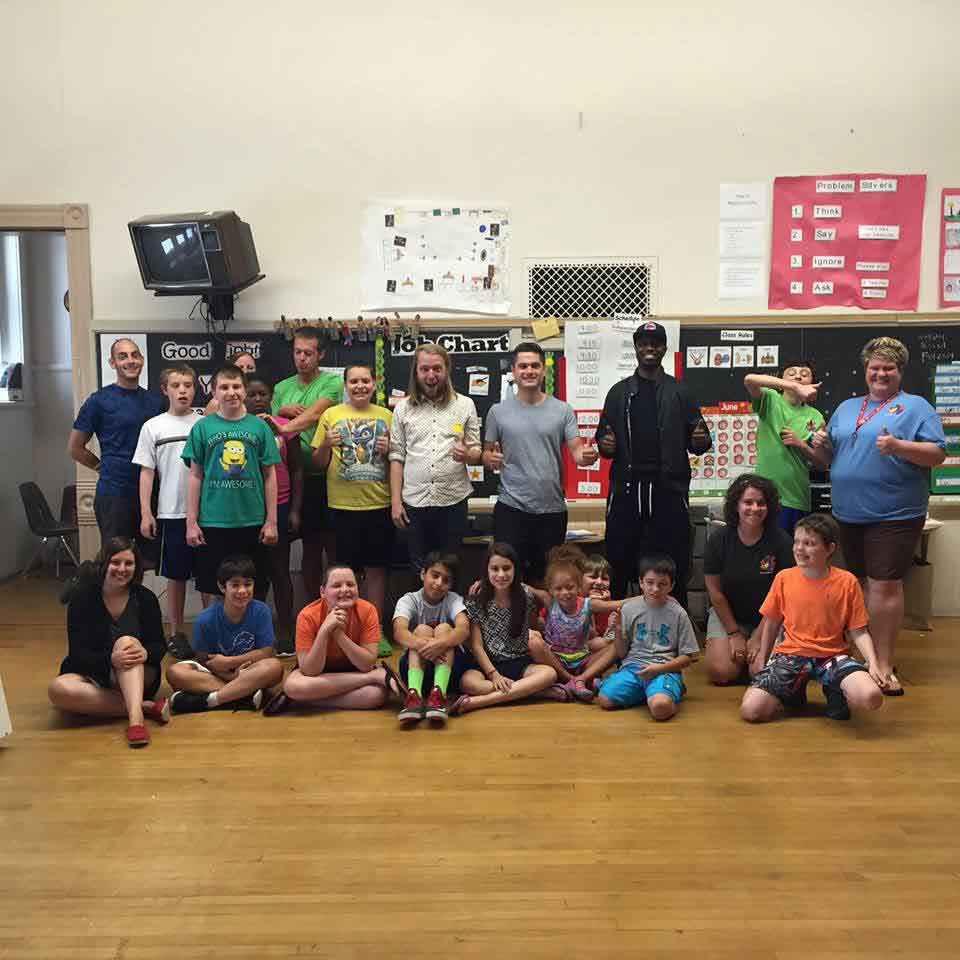
If you joined us at Raise Your Glass to Raise Awareness, you know the theme of the event was, “The Reasons Why.”  Thanks to our good friends at Brainstorm Media, we unveiled  a new video that features our staff, parents and students, all who give their reasons: “Why Bridgeway Academy.”
 

Written by alex · Categorized: Uncategorized

Dec 30 2015

SPIN for Camp Bridgeway – Sunday, February 28, 2016

Participate in one of six SPIN classes with some of central Ohio’s best spinning instructors at Flow Studio, 519 Lazelle Road, Westerville.

All classes are 60 minutes with a 15-minute break in between. 20 spots are available for each session.

Registration is $30 for the 1st SPIN and $15 each additional SPIN and includes a tech shirt, water and snacks.

Session Time Instructor Style
#001 9:00am Yvette and Beth RPM
#002 10:15am Angi O. and Kristy Freestyle / RPM mash-up
#003 11:30am Jim and Cheryl RPM
#004 12:45pm Amory Freestyle
#005 2:00pm Angie and Theresa Freestyle
#006 3:15pm Lynda and Laurie RPM

(A 7th SPIN class taught by Shelley Meyer may be added in January – join the event Facebook
page to stay up-to-date with information: https://www.facebook.com/events/512359028971265/).

FOR ADDITIONAL INFORMATION OR TO REGISTER, download the registration form here and mail, fax or email to:

Bridgeway Academy
SPIN for Bridgeway Academy
2500 Medary Avenue
Columbus, OH 43202
614-262-7540 (fax)
cargiro@bridgewayohio.org

Or call 614-262-7520 to register with a credit card over the phone.

SPIN is a fundraising event to support Bridgeway Academy, a non-profit organization with a
mission to meet the educational and therapeutic needs of children with autism and other developmental disabilities.Funds raised will support the organization’s summer camp program, providing much needed recreational and academic programming for students with autism and other developmental disabilities.

Written by alex · Categorized: Uncategorized

Dec 15 2015

Bridgeway Academy and Local Matters

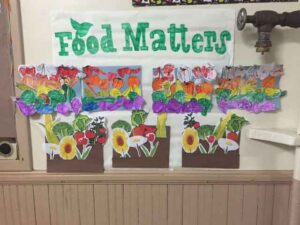
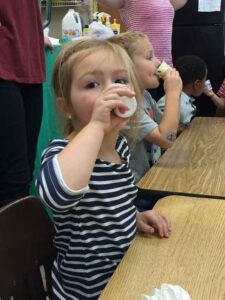
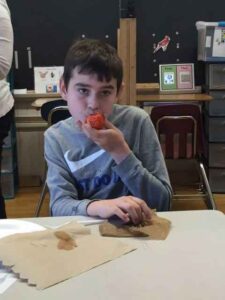
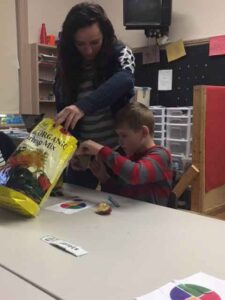
This school year Helping Hands Center / Bridgeway Academy has partnered with Local Matters to incorporate the Food Matters curriculum into our weekly health and science lessons.  Food Matters is a 24-week food and ecology curriculum that provides children with an understanding of what healthful food is, where it comes from, how it grows, and how it’s prepared.  “Food Matters’ holistic, multicultural and multi-sensory approach is unique among children’s nutrition education. The lessons give kids a language to talk about food, and help them understand the relationship between food and strong bodies. Kids emerge from the course with an appreciation for fresh, healthy foods, which serves as a foundation for lifelong healthy eating habits.” www.localmatters.org

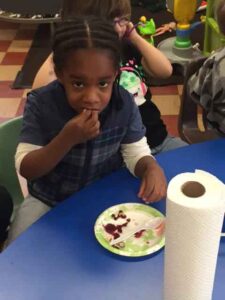
Classroom teachers and members of the Food Acceptance Team are leading lessons one time a week for 30-60 minutes.  Classroom teachers are also carrying over the vocabulary and content from these lessons into other lessons throughout the week.  Check out what we’ve been eating and learning about!

Week 1: Food Matters.

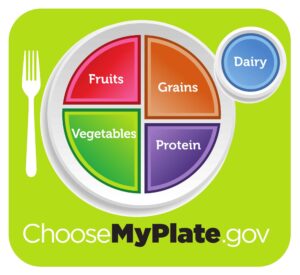
We learned about the USDA MyPlate food guide for making healthful food choices.  With the MyPlate we can categorize foods as fruits, vegetables, proteins, whole grains or dairy.  We also learned the importance of hand washing before food prep and eating with a catchy song.  The whole food we tasted this week was pears.

The Hand Washing Song

By Monique McCoy

First we squirt the soap. Then we rub, rub, rub.

We lock our fingers tight and we scrub, scrub, scrub.

We rinse them on the front and we rinse them on the back;

We say bye-bye to germs because they’re gone like that!

Week 2: What do Plants Need to Live?

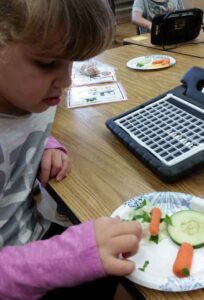
Plants are living things, an important source of food for humans and need food, soil, sunlight and water to live.  Many classrooms planted seeds in cups of soil, watered them and put them by a window to get sunlight.  We discussed plants that are also foods such as fruits and vegetables.  We also started taking leftover food out to a compost bin to create food for the plants in our on-site garden.  Key vocabulary related to week 2 includes: plants, food, air, water, shelter, sunlight and compost.  Week 2 we started food prep by making a fresh herb tofu dip to eat with carrots and cucumbers.


Week 3: Farms and Farmers.

During week 3 lessons we identified farms as important sources of food and learned about the great variety of foods produced in Ohio.  Ohio farmers grow and produce more than 200 crops and products!  We discussed the difference in appearance between vegetables from grocery stores and vegetables from local farmers markets.  Classrooms got hands on experience “harvesting” carrots from soil and cleaning them to prepare for eating.  Key vocabulary this week included healthful foods, harvest and local.  The whole food we tasted was roasted carrot.  Carrots were sliced and roasted with olive oil and salt.

Week 4: Gardens.

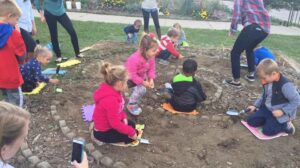
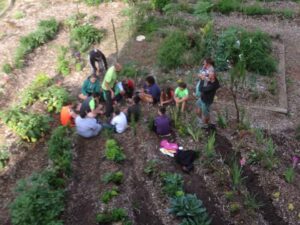
Students learned that food is grown in gardens.  We took trips out to our on-site garden and used garden tools to dig in the dirt and harvest a few vegetables.  Students also learned that gardens are not just for food but also for beautifying outdoor spaces.  Vocabulary related to week 4: gardens, community gardens, gardening gloves, spade, and watering can.

Students tasted a garden salad consisting of lettuce, shredded carrots, sliced cucumbers, sliced tomatoes and shredded cabbage.  Preparation included tearing the lettuce, cutting the tomatoes and making a vinaigrette salad dressing.

Food prep: Vinaigrette

Week 5: Food Medicine.

Students learned that foods we eat affect our health. Raw and lightly cooked fruits and vegetables have high amounts of Vitamins A, B, C, D, E and K.  Students know that different brightly colored fruits and vegetables contain vitamins that are beneficial to our bodies.  Vocabulary related to week 5: vitamin, medicine, smoothie, and healthful.  We all tasted a green smoothie made from spinach, peaches, bananas, cucumbers and apple juice.

Week 6: Whole and Processed Food Comparisons.

This week, students learned the difference between whole and processed foods.  We looked at packaging and ingredients to determine if foods are whole or processed.  Students classified whole foods as “all the time food” and processed food as “sometimes food”.  We related this week’s lesson to the previous week by reviewing the vitamins our bodies get from whole “all the time” food.  Vocabulary related to week 6: all-the-time food, sometimes food, processed, whole, and food label.  Students tasted roasted potatoes prepared with olive oil and salt.

Week 7: Eating with our senses: edible sculptures.

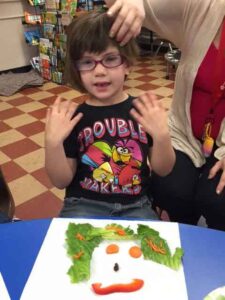
Students learned to appreciate the beauty of colorful whole foods, using color and shape to inspire them to appreciate the aesthetics of the foods they eat.  Food can be both nutritious and visually appealing.  We all use more than just our sense of taste when eating.  We look at, smell and often touch food!  Vocabulary related to week 7: senses, touch, taste, smell, hear, see, and food art.  Students created sculptures and pictures with shredded and sliced carrots, sliced red pepper, grapes, lettuce, sliced bananas, dried cranberries and raisins.  They were encouraged to taste their food as they explored with their other senses.

Week 8: Seasons.

This week students learned that Ohio experiences four seasons each year.  We reviewed the concept of growing and harvesting times, and that foods have their own growing and harvesting season.  Many foods in Ohio are harvested in the fall. As a supplemental activity, many students created leaf art by rubbing paper over a leaf with a crayon.  Vocabulary related to week 8: summer, spring, winter, fall, harvest, seasons, and kale. Students tasted baked kale chips prepared with olive oil and salt.  The kale chips were surprisingly a huge hit!

Week 9: Eating Locally All Year Long: Preserved Foods.

Students learned that foods grown in gardens and on farms in Ohio during summer and fall can be preserved and eaten during the winter.  We discussed canning, freezing and drying to help us eat locally all year.  Vocabulary related to week 9: canning, drying, freezing, preserving, cold, sour, sweet and cranberries.  Students tasted cranberries four ways: whole, frozen, dried and canned!


Week 10: Ohio Fall Fruits: Apples.

During week 10 students learned that apples and pears are fruits and are in season during the late summer and fall.  We discussed different varieties of Ohio apples, their colors and how they taste.  Many students read books about orchards and trees where apples and pears grow.  An important fact that we’ve repeated all ten weeks is “fruits have seeds!”  Vocabulary related to week 10: apple, pear, fruit, seeds, and orchard.  Students tasted three types of apples: fuji, golden delicious and granny smith.

Week 11: Healthful Fats and Oils.

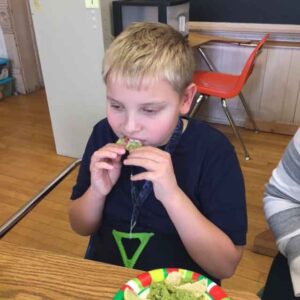
Students learned the importance of eating healthful fats and how to classify healthful vs. harmful fats.  Healthful fats are important for our heart and brain.  Some classrooms experimented with straws to learn how healthful and harmful fats move through our arteries.  Vocabulary related to week 11: arteries, blood, brain, heart, fats, healthful, and processed.  Students helped teachers and therapists prepare guacamole with a healthful fat, avocado. 

The first half of the Food Matters lessons has been so fun.  We’ve received a lot of great feedback.  Mr. Ramsey, a teacher in the Coyote class, stated, “Every single one of my students has tried every single food except when they were absent.”  Mr. Adam in the Cheetahs said, “I have had 3 separate parents tell me that they have seen a real difference in what their child is willing to try at home. They aren’t eating a whole meal of new things but they aren’t refusing to take bites of things like they had before”.  Lindsey Cargill, a speech-language pathologist, has two sons in preschool.  She stated that one of her son’s dreads coming to school on Local Matters days, but he always tries every new food and excitedly runs to tell her after the lesson. 

As you are carrying over the vocabulary at home, remember to keep it fun and encourage trying new foods with our key phrases:

  • “It’s my favorite” or “it’s not my favorite”.
  • “Take one bite/taste, then you can say no thank you if it’s not your favorite”.

We can’t wait to start the second half after winter break!

This project has been funded, in part, by the Reinberger Foundation. We are grateful for their support.

Written by alex · Categorized: Uncategorized

Nov 20 2015

The Dick & Jane Project

Earlier this spring, Ben Shinabery, Executive Director of the Dick & Jane Project contacted Helping Hands Center. He stated that he had received a grant from Autism Speaks and had chosen Helping Hands Center to launch a pilot program that would culminate with our student’s writing and producing two original songs. This was the first time the Dick & Jane Project approached an educational environment that primarily serves students with autism and other developmental disabilities. With great excitement, the planning began. Ben and Andy presented timelines, examples of previous musical productions and many ideas with one main goal in mind: to modify their program to fit our student’s needs. Together, we discussed lesson planning that would prepare the students for the Dick & Jane Project. Students discussed the idea having a theme for a song much as they would discuss a theme for an academic paper, and vocabulary associated with the project, such as genre, chorus, and melody. Students in the third through sixth grades were chosen to participate.

The project began the second week of June. Ben and Andy along with two producers, Rashad Thomas and Corey Montgomery, visited Helping Hands Center for a two week time period, an hour and a half each day. The musicians spoke directly with the students about their interests and explained the song writing process. The musicians and students created a list of common interests, then held a vote to determine song topics. Two topics were chosen: avoiding reminders which is a behavior redirection strategy utilized at school and visiting the pool during community outings.

Rashad and Corey spoke in depth about the reasons the students enjoy the pool and the reminder system. Corey would return each day with lyrics in mind that encompassed what the student’s had suggested. Rashad would return with a suggested rhythm. Both musicians were incredibly open to criticism from the student’s and made changes to their ideas as needed. Suggestions ranged from, “hey maybe a little less flute sounds,” to “why don’t you add a lyric about the slide at the pool.” As our students practiced making suggestions and giving corrective feedback, Corey and Rashad listened and encouraged them. Over the course of two weeks, two incredible radio quality songs were written and composed with the help of our students. Throughout the entire process, our student’s made comments about how Ben, Andy, Rashad and Corey really heard what they had to say.

As the coordinator for many of the student’s involved, it was exciting to witness so many students feel empowered. Every single student was engaged in the production process and excited to know that a song they had a hand in writing would be heard on the radio. They truly felt like “rock stars,” as so many of our students’ stated. Co-Executive Director Erin Nealy had the following to say about the experience: “In a very short amount of time, the Dick & Jane Project team made a tremendous impact on the students and staff at Helping Hands Center’s Summer Camp program.  The students were so engaged in the songwriting and production process and this even transferred into my home environment, as my (typically developing peer model) daughter shared the experience with me with joy and enthusiasm.  She taught one song to our family, and shared her excitement about her participation in the process.  We even transferred the song to make it applicable in our home environment as well.  In addition, I was able to observe one of the sessions with the team, and all the students demonstrated engagement in the process and with the team.  We are grateful to the Dick & Jane Project and Autism Speaks for their partnership this summer and for providing our students with such a unique opportunity.”

As an organization we truly appreciate the staff at the Dick & Jane Project. Not only were they professional, caring and ambitious with their work, they truly made the experience an exceptional one for everyone involved.

Written by alex · Categorized: Uncategorized

Oct 19 2015

October is National Sensory Awareness Month.

The sensations we feel every day, we often take for granted. Sight, hearing, taste, smell and touch, we learn about these in school as our five basic senses. But our internal senses, vestibular and proprioceptive, are often not taught growing up.

The vestibular system regulates our balance and movement.

Our proprioceptive system provides us with a sense of where our body is in space based through the muscle and joint feedback we receive.

The vestibular and proprioceptive systems develop in utero at 6 weeks gestation.

We all learn through sensory sensations, and what we feel by touching and moving is how we individually experience the world.

As an Occupational Therapist (OT), I have taken numerous classes and studied for years about our sensory system. I continuously learn new information as I grow as a therapist. At work, I get into the OT mindset where everything is sensory related, but at home things change.

I am a mother of two, 3 and 6 years old, self-diagnosed, sensory seeking daughters. It is a challenge to entertain after a long day at work and school. TV is so much easier to keep their attention when I’m trying to cook dinner or go through backpacks or pack lunches for the next day. But I know they love physically exploring new environments and crave movement. So, I started developing a list of things they can do on their own while I supervise and get the after-school madness back in control. Here are some of our favorite sensory activities:

Outdoor while the weather is warm:

Play on a swing set, slide and climb monkey bars or a climbing wall, jump on a trampoline. My kids like to pretend they are American Ninja Warriors and make up their own obstacle course. Don’t have a gym set? Dollar stores often have cheap toys that kids love such as hula hoops, jump ropes, balls to kick or throw, and crawl through a tunnel. Don’t want to spend money on things? Check out outdoor/indoor.

Outdoor and indoor activities:

How about doing jumping jacks, animal walks (bear crawl, crab walk, kangaroo hops, walk like a seal, penguin, or gallop like a horse), spinning, jumping forward and backwards, skipping, running, wall push-ups, yoga po
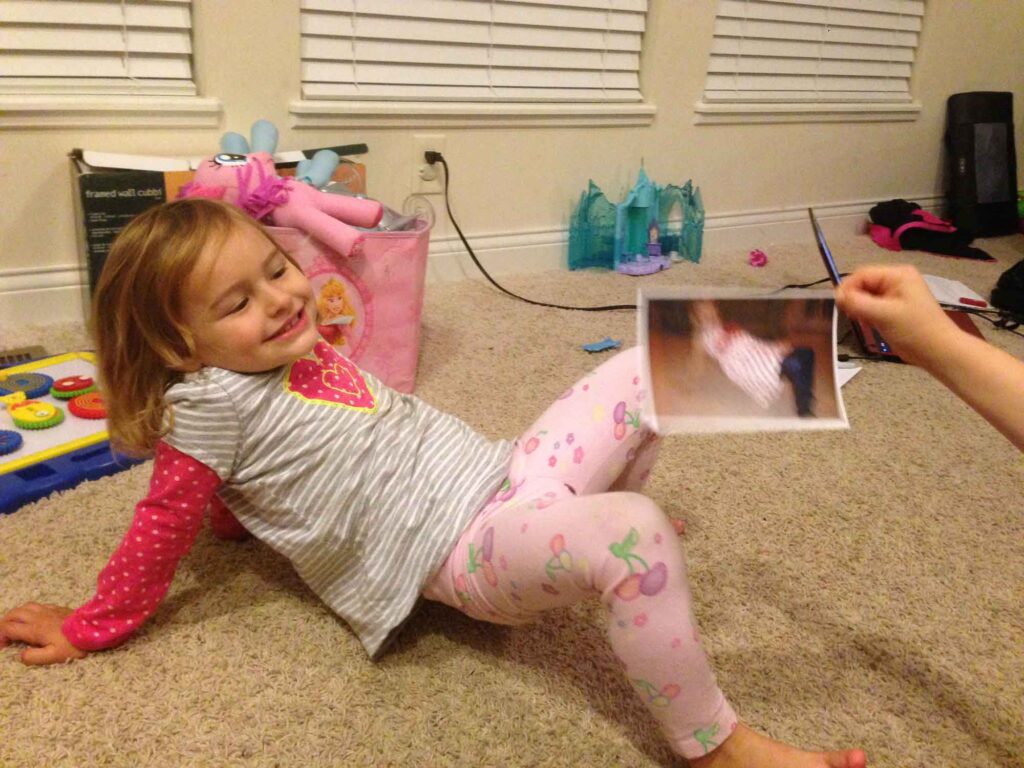
ses. Cosmic Kids Yoga on YouTube is one of our favorites. Brain Breaks on GoNoodle.com.   Build a fort out of blankets and crawl through. Squeeze and smash with pillows, jump on a pile of pillows on the floor, wrap up in a blanket like a burrito. A way to get the kids to stay on task is to make a game out of it. Taking pictures of them doing the activity, print then pick a card. The kids take turns doing activities 5-10 times.

Indoor activities:

Tactile bins are a great way to keep the hands engaged. We have hundreds of nerve receptors in our palms and fingers. Our tactile sensation helps us understand the world around us by our sense of touch. Making sensory bins for home is fun and they can be filled with all kinds of items like rice, beans, salt, sand, bird seed, grass seed, dry corn, dry oats, shaving cream or water beads. Just make sure kids do not ingest the non-edible materials. Other tactile play may include Play-Doh, Moon Sand, Slime or Putty. See below for recipes and pictures for home-made dough and slime. Musical instruments are also a great way for kids to experience their senses. Holding and making noise provides auditory feedback as well as proprioception when something is struck like a cymbal or xylophone. When hands feel rhythm sticks tapping together, the feeling or vibration can resonates through the hands for up to several minutes after stopping the play.

Here is the basic recipe for Home-Made play-dough:

1 cup salt

2 cups flour

2 cups water

1 tablespoon cream of tartar (find this in the baking section at the grocery store)

2 tablespoons vegetable oil

Make it smell like fall by adding 1 ½ tablespoons of pumpkin pie spice

Make it look like fall by adding yellow, red or a mix of food coloring to make orange.

Directions: Whisk all ingredients into a pan and put it on the stove. Cook on medium heat for a few minutes. It will start out runny but quickly form into a ball. When it gets thick, remove it from the heat and continue to stir. When it is semi-cool, place the ball onto a floured surface and knead the dough. Add another ½ tablespoon of flour and knead until the consistency you want. Store in a Zip-lock bag in the refrigerator to last longer.

Here’s the recipe for Home-Made Slime

4 oz. bottle of Elmer’s white glue or Elmer’s school glue gel

Water

1 teaspoon of Borax (find this in the laundry detergent aisle)

Two bowls

Food coloring or glitter (optional)

Directions:

  1. In one bowl, mix 4 oz. of glue and 4 oz. of water. Add red, yellow or a combo to make orange of food coloring and glitter
  2. In the other bowl mix 1 teaspoon of Borax with 1 cup of warm water until the detergent is dissolved.
  3. Add the glue mixture to the borax solution, stirring slowly.

The slime will begin to form immediately into a ball. Use your hands to pull it out and finish kneading it until it gets less sticky. Dump out the excess water.

Have fun letting your kids help measure and mix the ingredients. I hope you enjoy these activities.

-Leslie Murdock, M. S., OTR/L

Written by alex · Categorized: Uncategorized

  • « Go to Previous Page
  • Page 1
  • Interim pages omitted …
  • Page 9
  • Page 10
  • Page 11
  • Page 12
  • Go to Next Page »

Bridgeway Academy
1350 Alum Creek Drive
Columbus, OH 43209
614.262.7520

Privacy Policy

Equal Opportunity Employer City of Columbus Franklin County Board of Commissioners

Donate Now
Facebook Link Instagram Link Twitter Link Youtube Link LinkedIn Link
The Yass Prize