• Skip to main content
Bridgeway

Academy and Therapy Center

  • Who We Are
    • Organizational Leadership
    • Bridgeway Value Awards
    • Testimonials
    • Community Partnerships
    • FAQs
    • Contact Us
    • News
  • Events
    • Bridgeway Golf Scramble
    • AmazeAbility: 20 Years of Possibility!
  • Make a Difference
    • Scholarship Granting Organization
    • Donate to Bridgeway
    • Planned Giving
    • Amazon Wishlists
    • Champions, Heroes and Superheroes
    • Bridge Builder Awards
    • Volunteer Opportunities
  • For Parents
    • Prospective Parents
    • Attendance Form
    • Wait List
    • Enrollment Application
    • Autism Scholarship & Other Funding Opportunities
    • Current Parents/PTA
    • Resources
    • Calendar
  • Blog
  • We’re Hiring
  • Bridgeway Academy
    • Preschool Program
    • Peer Model Program
    • Elementary
    • Academic Program
    • Applied Program
    • Life and Vocational Skills
    • B.R.I.D.G.E. To Adulthood
    • Summer Program
    • Before/After Care
  • Bridgeway Therapy Center
    • AAC Evaluation Center
    • Family Partnership & Crisis Stabilization
    • Clinical ABA
    • Music Therapy
    • Occupational Therapy
    • Physical Therapy
    • Mental Health & Psychology
    • Speech Therapy
  • Donate

Uncategorized

Aug 19 2016

Are you sleeping well?

By Psychology Department

As you look to set your child up for success this school year, be sure to not overlook one crucial area: sleep.

It is estimated that as many as 80% of children with Autism Spectrum Disorder (ASD) have difficulties falling asleep and/or staying asleep.  Additionally, chances are that your child has drifted away from his or her school-based bedtime routines due to the more leisurely pace of summer. Sleep is the glue that holds everything together and has important benefits not only for physical well-being, but also for learning, behavior, and emotional development. In addition to increased daytime drowsiness, a poor sleeper may be more irritable, short-tempered, emotional, hyperactive, aggressive, and/or have difficulty learning new skills. Conversely, well rested children (as well as teens and adults) are more even tempered, adaptable, alert, ready to learn, and have a higher tolerance for frustration.

The average hours of sleep needed by children varies across ages. Children ages 1-3 typically need 12-14 hours, ages 3 to 6 need 10-12 hours, and ages 7 to 12 need 10-11 hours. Teens typically need 8 to 10 hours of sleep each night. For young children, these sleep guidelines also include naps. Most children do not nap after the age of 5, although some continue to require naps. Naps should be well-timed, as those that are too long or too close to bedtime may interfere with the quality of nighttime sleep. Additionally, naps intended to make up for lost nighttime sleep may further disrupt the sleep-wake biological rhythm. Despite these guidelines for sleep, it’s important to remember that each child is an individual, and he/she may need more or less sleep. Observations of your child’s behavior may help you to determine whether you need to adjust their sleep schedule. For example, a child who becomes more irritable or hyperactive in the evenings may actually need an earlier bedtime.

Fortunately, if your child is not sleeping well, behavioral and environmental changes often help. Here are some tips:

  • Limit screen time close to bedtime. Tablets, phones, and computers can be especially disruptive to sleep due to the proximity to the user’s eyes. Turn these devices to “night mode” in the evenings when possible. It is also best to not have electronic devices (used for entertainment purposes) in the child’s bedroom.
  • Avoid sugary snacks and drinks (including caffeine in chocolate and sodas) in the evenings.
  • Get some exercise after school, but avoid stimulating activities too close to bedtime.
  • Establish a calming and predictable bedtime routine lasting about 20-30 minutes that includes relaxing activities such as reading and listening to soothing music. Dim the lights in the room during these routines. Incorporating relaxation techniques such as deep breathing and yoga may also be helpful. Your child’s psychologist can also help teach more advanced techniques such as progressive muscle relaxation.
  • It may be helpful to create a visual schedule for your child to follow each evening, which outlines his or her routine. Your child’s PBS or psychologist can assist in developing such schedules.
  • Try to be as consistent as possible in implementing bedtime routines. Keep bedtimes and wake-up times as consistent as possible, even on weekends.
  • Create a restful sleep environment by keeping your child’s bedroom cool, dark, and quiet. Use of a white noise machine, calming music, etc. can help drown out household noises as well as have a calming effect at bedtime.
  • If you find your child needs to adjust their bedtime or wake-up time, try moving these times 15 minutes earlier each day or every few days until your child has adjusted.
  • If your child is continually resisting their bedtime, then reward systems may help. For example, your child may get to pick from a treasure box in the morning if they followed their bedtime routine in a cooperative manner and went to bed on time. Contact your child’s PBS or psychologist for assistance in designing such systems.

If your child is still experiencing difficulty falling/staying asleep despite your best efforts, it will be important to consider whether an outside variable is affecting your child’s sleep.  Variables may include but not be limited to sleep apnea, sleep walking, sleep terrors, restless legs syndrome, anxiety, or depression.  Talk to your child’s pediatrician or psychologist if you continue to have concerns after putting a consistent schedule in place or if you need further guidance in implementing sleep strategies. Your child’s pediatrician can also further evaluate the quality of your child’s sleep and provide advice on whether supplements (e.g., Melatonin) or sleep medications may be helpful if difficulties persist.

References and Further Reading:

https://www.autismspeaks.org/family-services/health-and-wellness/sleep

http://www.webmd.com/brain/autism/helping-your-child-with-autism-get-a-good-nights-sleep#2
https://sleepfoundation.org/

Written by alex · Categorized: Uncategorized

Aug 12 2016

Program Expansion at Bridgeway Academy

In less than a week, Bridgeway Academy will begin its 12th school year with 150 staff members and 155 students, early-intervention / preschool through 10th grade!  We are looking forward to an outstanding 2016-17 academic year with many fun and engaging activities planned throughout the year!

Bridgeway Academy is excited to share news about the growth of its programs, too. We continue to work hard to develop programming that meets the changing needs of our students, especially for students entering middle and high school. Educational goals for these students include transition planning from students into young adulthood.

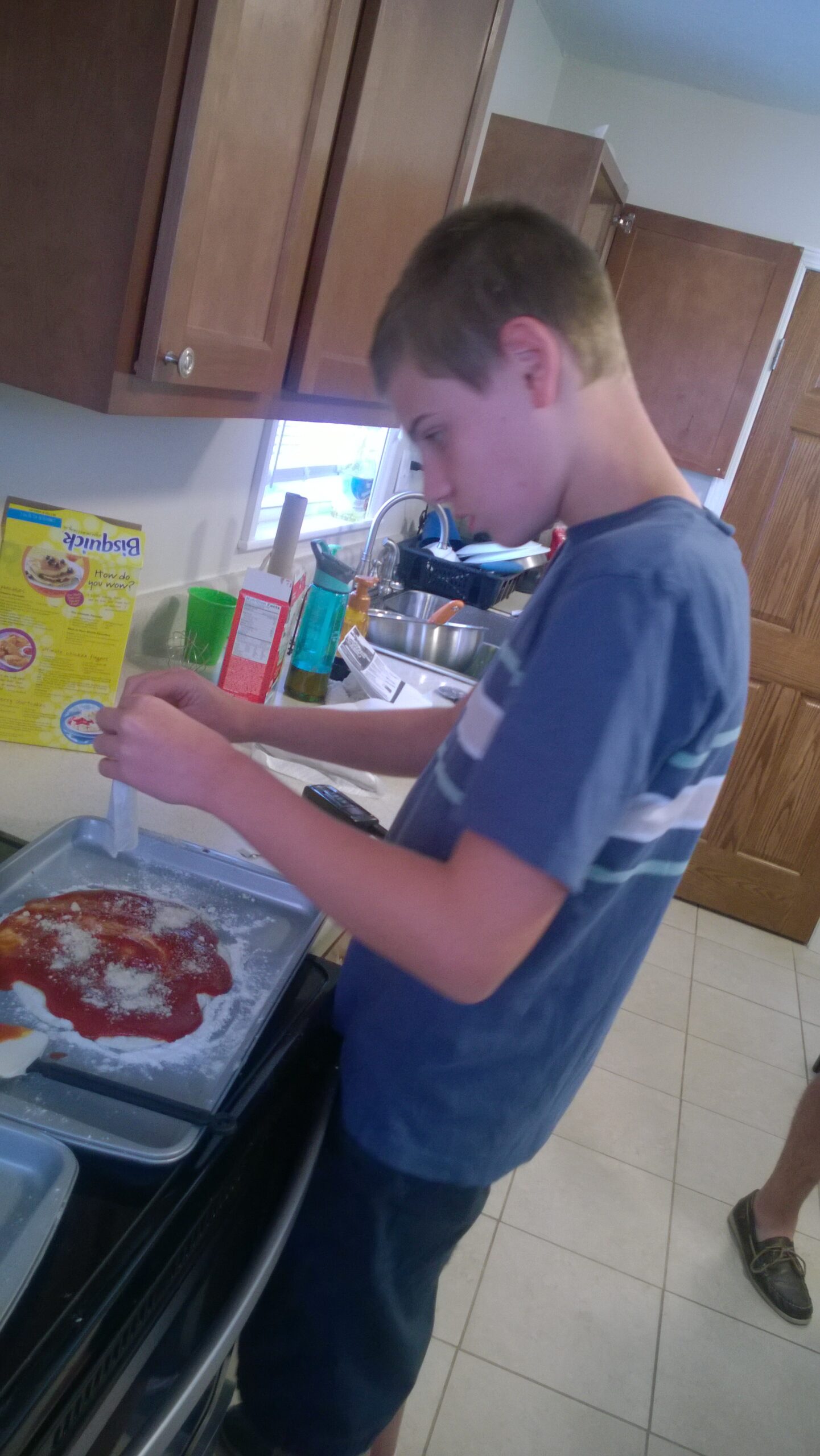
In January 2015, Bridgeway Academy opened its Life Skills Center, a space where middle and high school students work on life skills in a natural environment. This program has provided students with the opportunity to practice skills like cooking, cleaning, laundry and leisure skills, with the support of their teachers and therapists who work to apply and generalize their educational goals across this setting.

This year, Bridgeway Academy opens a Vocational Skills Center. The Vocational Skills Center will be located in the community room of a neighborhood church. Bridgeway Academy is leasing this space so that students will have plenty of room to build skills for employment and independence later in life. Students will work with teachers and therapists on pre-vocational skills. An internship program with local businesses is in development so that students will be able to generalize learned skills in a natural environment. We continue to seek partnerships for the internship program. If you have connections with individuals or businesses that would like to participate in this kind of opportunity, please let us know. We’d also like to thank Huntington National Bank for their financial support of this program.

Bridgeway Academy’s goal is to help every student reach their highest potential as we work together to build the bridge from home to school, to the community and beyond. We look forward to an outstanding year in support of Bridgeway Academy’s mission to meet the educational and therapeutic needs of children with autism and other developmental disabilities.

Written by alex · Categorized: Uncategorized

Jul 14 2016

Music Therapy in the Summertime: Camp Sing-Along

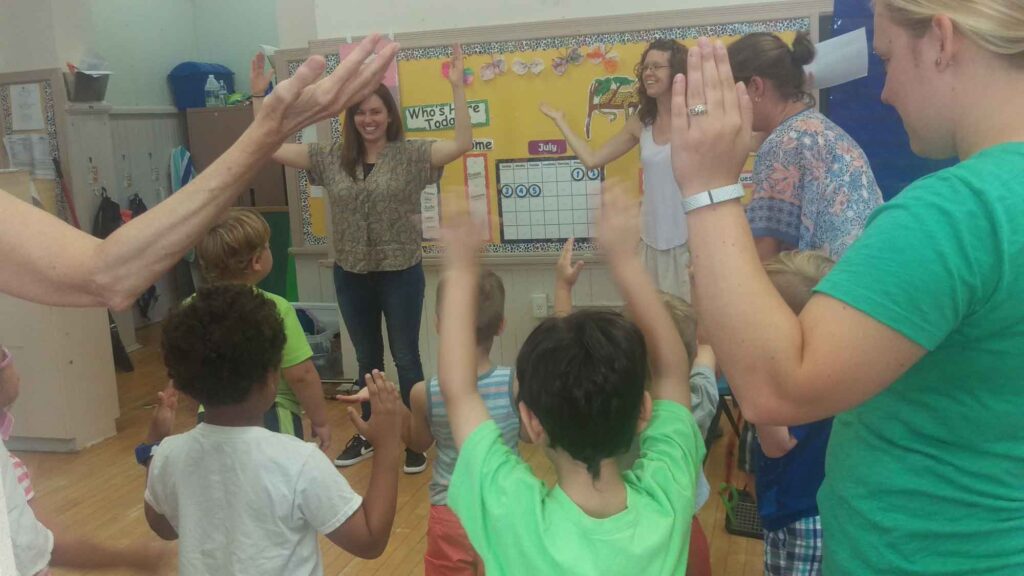
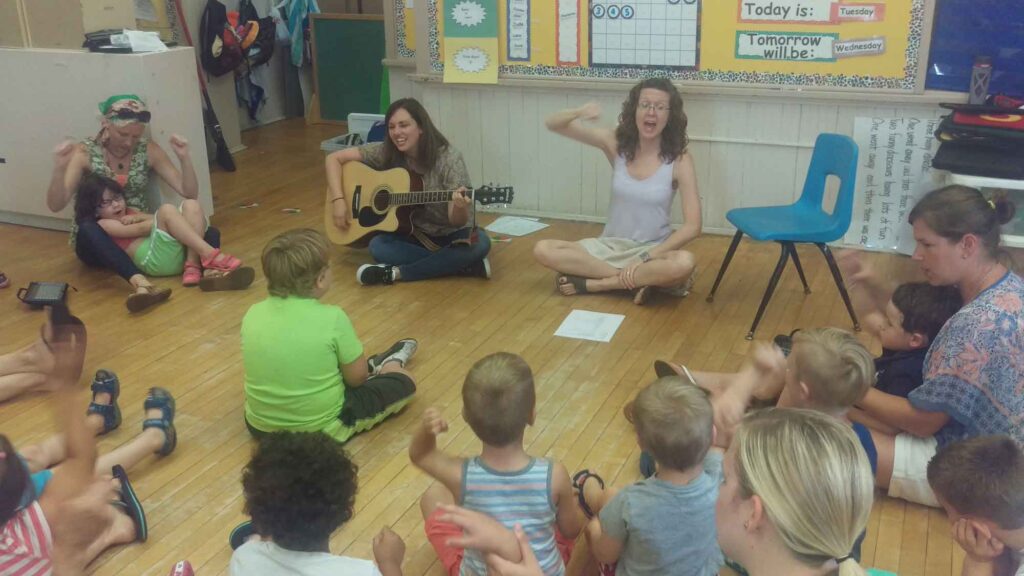
Part of the summer camp experience at Bridgeway Academy includes a half-hour camp sing-along for every classroom once a week. This summer Miss Liz and Ms. Kristin have been leading a variety of music activities, including echo songs, chants, finger plays, dances, and more.

History of Camp Sing-Along
The tradition of singing camp songs dates back to the late 1800’s. While it originated in camp gospel revival meetings, it has transformed throughout the years and now focuses on songs that are fun and easy to remember, instilling a sense of community and fostering positive relationships.

Camp Sing-Along at Bridgeway Academy
Camp sing-along at Bridgeway Academy is a large group music therapy setting and therefore targets many of the skills our students find challenging. As they participate in songs, chants, finger plays, dances, and clapping games, students become a part of their class and school community, focusing on positive social interaction. There is an emphasis on joint attention, thus promoting an awareness of the environment. Research shows that during group music therapy experiences students exhibit an increase in following directions, conversational skills, responsiveness, and eye gaze and eye contact.

Other skills that are targeted during large group music therapy are eye-hand coordination, problem solving, creativity and choice-making, persistence, self-control, keeping a steady beat, and listening. Almost all of these skills are targeted during one half-hour camp sing-along, and all of these skills are targeted using fun, playful activities that are easily remembered and reproduced in various settings.

If you have any questions about your child and camp sing-along, please feel free to contact Kristin Kummer, MT-BC (kkummer@bridgewayohio.org) or Liz Woolley, MT-BC (lwoolley@bridgewayohio.org).

Written by alex · Categorized: Uncategorized

Jun 27 2016

Therapies at Bridgeway Academy

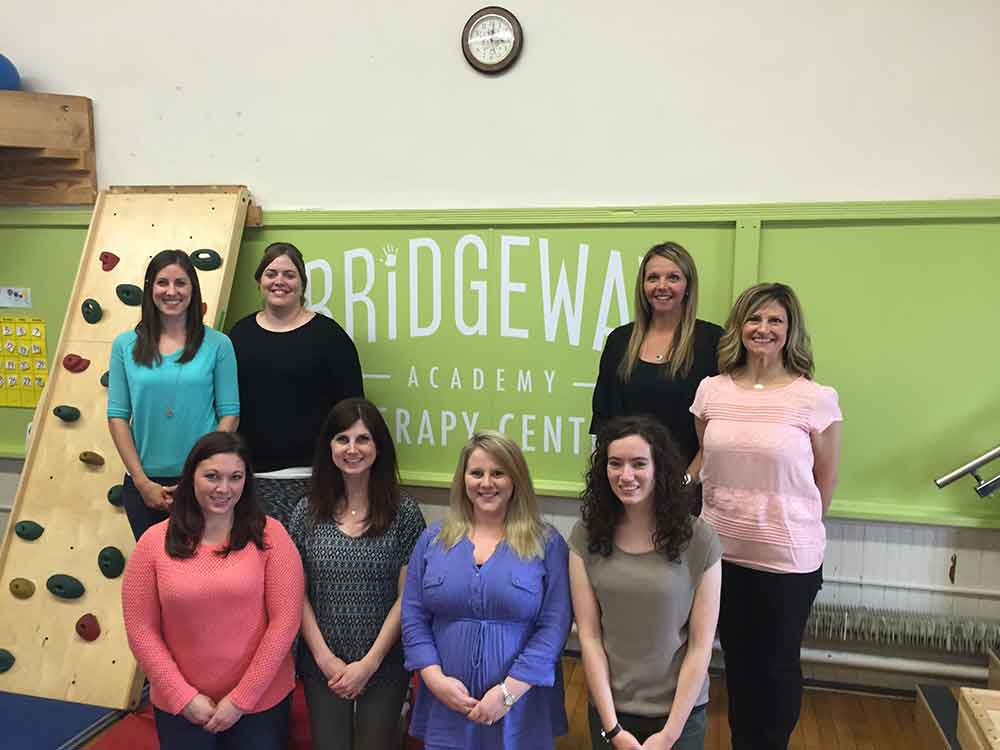
Bridgeway Academy is so proud of its thirty-one (31) Music, Occupational, Physical and Speech Therapists who provide services both the students enrolled in Bridgeway Academy’s Education Center as well as for those who come to the Therapy Center strictly for therapeutic services. All departments integrate seamlessly into the school day as well as collaborate with each other and the classrooms, providing Bridgeway Academy’s students a strong foundation for learning. Our therapy departments have been hard at work receiving specialized training, presenting or attending regional, state and national conferences and providing the best therapy services available in central Ohio, supporting our mission to meet the educational and therapeutic needs of children with autism and other developmental disabilities.

Physical Therapy
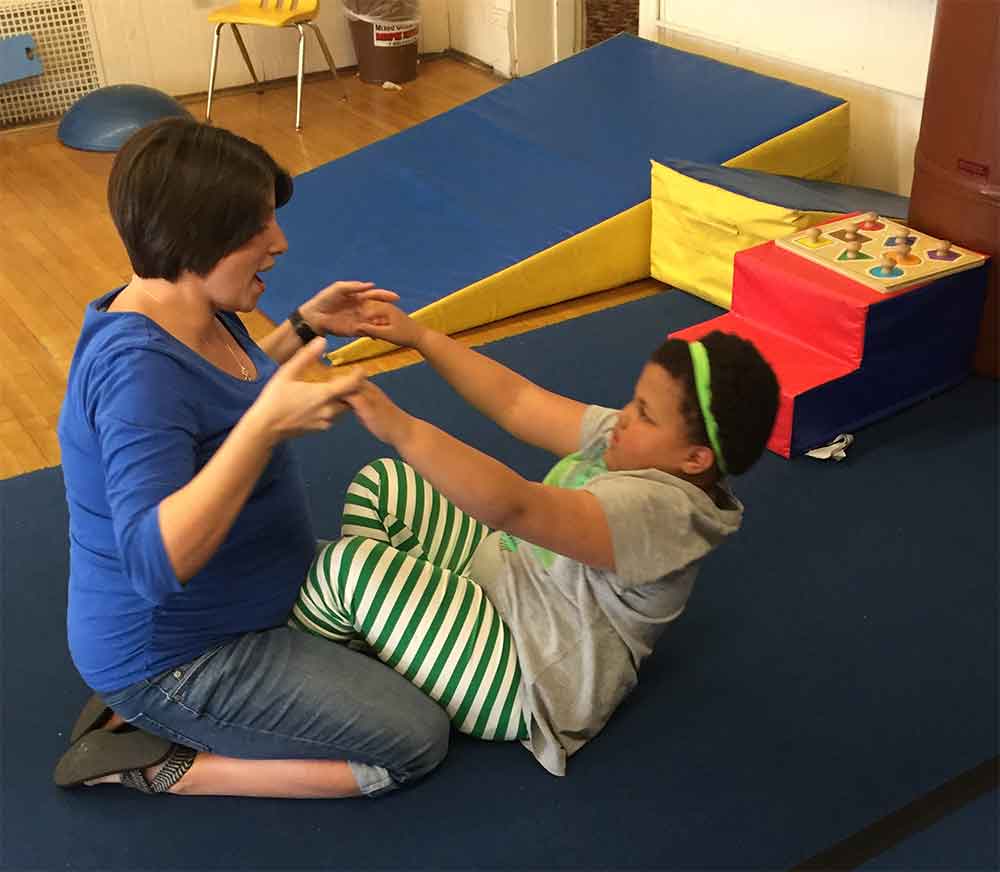
Recently, two of our physical therapists attended a course titled “Core Therapy, Functional Movement with Balls, Bands & Balance.” This course highlighted the importance of having a strong core to help promote and facilitate functional movement! The therapists were also provided a plethora of different exercises to incorporate into therapy sessions using therapy balls and resistance bands.

Occupational Therapy
Bridgeway Academy’s Occupational Therapists (OT) further their education by attending classes of interest. Recently, Ashlee Davis participated in the “Yoga 4 Classrooms,” workshop to learn how to integrate yoga into therapy sessions. Many students lack the skills required for self-regulation, impulse control, and overall body awareness. This class focused on how to recognize imbalance, stress, and how these factors effect behavior. Yoga 4 Classrooms was an interactive and worthwhile experience that expanded Ashlee’s knowledge and will help create a positive school environment.

Leslie Murdock and Lara Pytlik attended two classes together: “Sensory Integration- Assessing & Treating Kids When Formal Testing Isn’t Possible,” and “AOTA Fieldwork Educators Certificate.” Many students lack the skills required to remain focused and follow directions. Leslie and Lara attended the sensory integration class to expand their knowledge of sensory-based disorders and to select appropriate treatment goals to improve these skills. The fieldwork class is designed to enhance fieldwork experience for students attending OT school. Leslie and Lara learned new strategies and activities to provide a high-quality fieldwork opportunity through this course, as well as speaking with other OT’s in attendance.

Kim Kay recently attended the PLAY project conference to learn more about this approach.  Bridgeway Academy is so proud of its OT’s for the passion they have in learning more about this profession!

Speech-Language Pathology
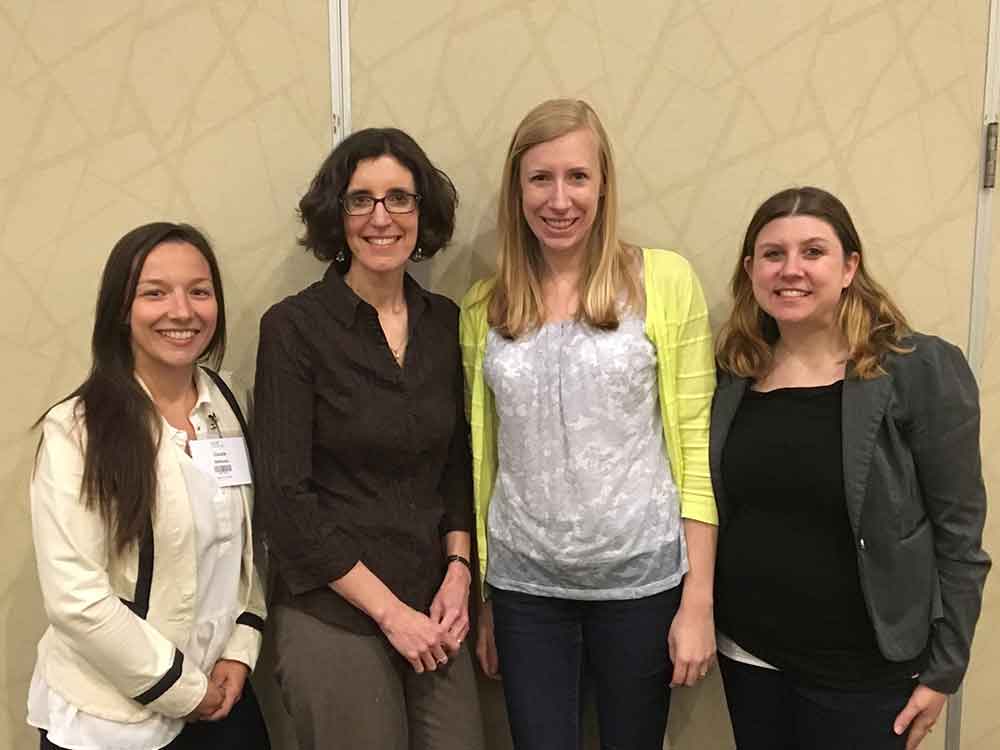
In April, 2016, Bridgeway Academy’s speech department participated in Social Thinking and Moving Forward with LAMP trainings.  The Social Thinking methodology addressed pragmatic skills at home, school, and in the community for individuals ages 4 and older.  This training was taught by the founder of Social Thinking, Michelle Garcia Winner.  Additionally, this curriculum parallels the common core/state standards.  Since the training, we have discussed implementing this curriculum in individual speech sessions, speech parties, and social groups for both education and therapy center students and clients.

The LAMP course offered hands on experience with AAC devices and was taught by the author of the LAMP approach, John Halloran.  By learning how to quickly set up and program devices in a variety o
f settings and exploring new strategies for teaching LAMP, the speech department is more equipped to meet the individual needs of our students.

To learn more about all of the Therapy Services offered at Bridgeway Academy, including Music Therapy and Psychological Services, please visit: https://bridgewayohio.org/programs-services/therapy-center/

Written by alex · Categorized: Uncategorized

May 13 2016

May is Better Speech and Hearing Month!

Bridgeway Academy’s therapy department includes a team of twelve speech-language pathologists – SLPs – who strive to meet the therapeutic needs of the students and clients who attend or visit Bridgeway Academy each day, in many ways outside of traditional, individual speech therapy. At Bridgeway Academy, speech therapy extends far beyond working on speech sounds and answering “WH” questions.  Though these skills are commonly addressed in speech therapy at Bridgeway Academy and elsewhere, the roles and responsibilities of a speech-language pathologist include a variety of other areas related to speech and language.

The American Speech and Hearing Association (ASHA), the governing body of the field of speech-language pathology, defines a Speech-Language Pathologist as, “… the professional who engages in professional practice in the areas of communication and swallowing across the life span. Communication and swallowing are broad terms encompassing many facets of function. Communication includes speech production and fluency, language, cognition, voice, resonance, and hearing. Swallowing includes all aspects of swallowing, including related feeding behaviors.”

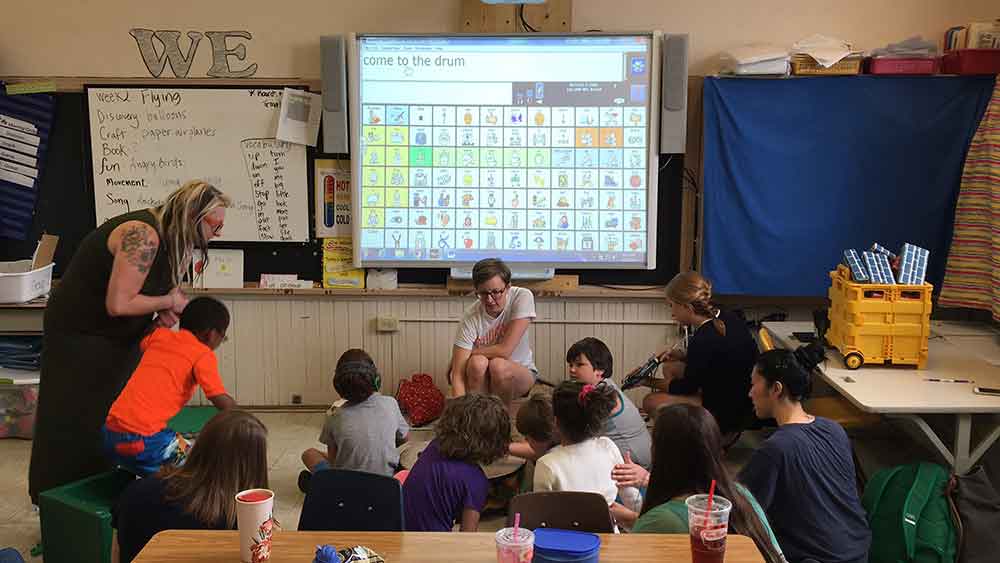
The team at Bridgeway Academy provides speech-language therapy services in individual therapy, small groups and whole class activities.  They work with students on a variety of skills ranging from articulation and language comprehension, to AAC (alternative and augmentative communication) use, social language skills, and even food acceptance.  Here are just a few of the unique ways that Bridgeway Academy’s speech department strives to provide the most effective and practical therapy for its students and therapy clients.


Individual Therapy Sessions

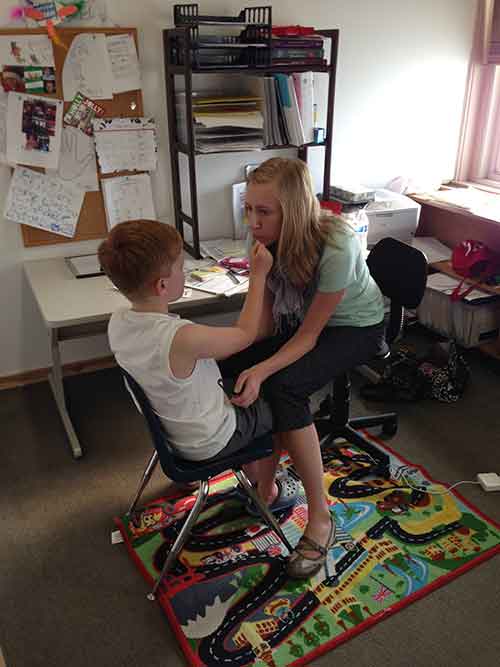
The SLPs at Bridgeway Academy spend much of their days in individual speech sessions in the speech room.  The SLPs have a lot of creative ideas for making speech fun, motivating, and rewarding!  Individual speech therapy sessions allow the therapist and child to focus on building and improving their speech and language skills in the specific areas that the child needs most.  Individual sessions can incorporate a variety of techniques to teach a wide range of skills, including articulation and use of PROMPT technique, use of AAC devices – specifically incorporating LAMP Words for Life – for non-verbal students, and developing problem solving skills while incorporating programs like Social Thinking.  Individual therapy sessions can also focus on teaching general language skills, through both play and structured academic-style tasks, like answering WH questions, following directions, auditory processing, and developing first words and core vocabulary.


Push-in Sessions

The Bridgeway Academy SLPs also spend time with individual students within the students’ classrooms, and push-in sessions are just as important as pull-out sessions.  Push-in sessions allow students to continue to work on developing their speech and language skills in a functional setting, and incorporating those skills, previously targeted in individual therapy, into their daily routines and academic tasks.  SLPs can support students with direction following, understanding the vocabulary in an academic activity, supporting students in social and group activities, and encouraging AAC device use within the classroom.  Many of the Bridgeway Academy SLPs accompany older students on community outings, assisting them in building their language skills and improving their communication with others outside of a familiar setting.

Speech Parties

Speech Parties are another way to continue to promote speech and language development in the classroom.  During speech parties, the SLPs lead whole class activities, most often promoting development of social language skills among the students within the classroom.  Speech party activities can target skills ranging from verbal and non-verbal turn-taking, to describing a mystery item to a peer.  Speech parties allow students to learn and interact through fun and games, while – sometimes unknowingly – building their language skills and social interactions.


Co-Treats

The Bridgeway Academy therapy department is made up of a large team of Music Therapists, Occupational Therapists, Physical Therapists, Psychologists, and Speech-Language Pathologists.  Whether they are encouraging a child to request “more” while swinging during PT, incorporating language concepts into an OT activity, working on speech sounds while singing during music therapy, or working on social and emotional language along with a psychologist, the SLPs at Bridgeway Academy love having the opportunity to co-treat with all of these disciplines to better meet the needs of their students.

Groups

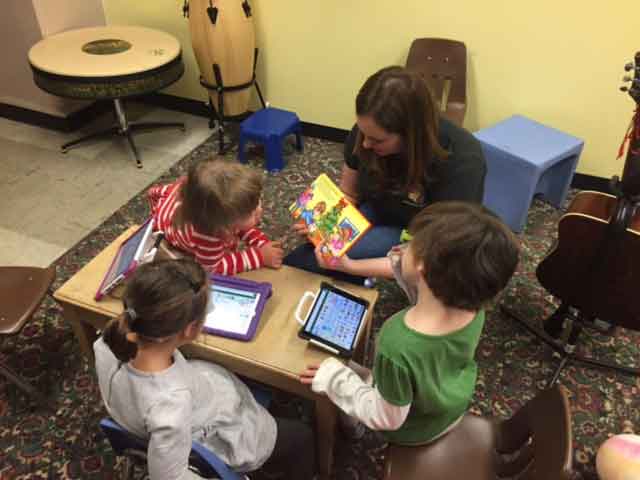
The Bridgeway Academy SLPs provide speech therapy in a variety of group settings throughout the school days.  Teaming up with the music therapy department, the speech department participates in a variety of groups to promote development of social skills for students of all ages.  The speech and music teams are involved in social groups for school-age students, along with weekly theater groups for older students, and an AAC group for younger students who use communication devices.  These groups provide students with the opportunity to develop language and social skills and encourage interactions, with both familiar and new peers, in a setting that is quite different from an individual therapy session.

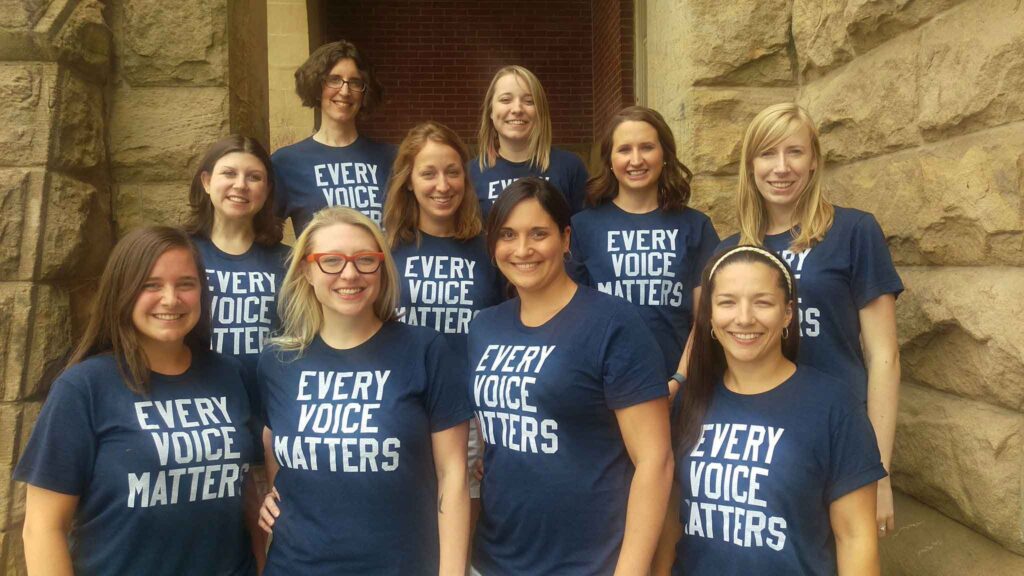
The speech team takes pride in being a part of such a collaborative organization that values communication of all kinds, and remembers that every voice matters.  If you have questions about speech therapy at Bridgeway Academy, or about ways to promote speech and language outside of the speech room, contact the speech department – or your child’s/classroom’s Speech-Language Pathologist.   Happy Better Speech and Hearing Month!

Written by alex · Categorized: Uncategorized

  • « Go to Previous Page
  • Page 1
  • Interim pages omitted …
  • Page 8
  • Page 9
  • Page 10
  • Page 11
  • Page 12
  • Go to Next Page »

Bridgeway Academy
1350 Alum Creek Drive
Columbus, OH 43209
614.262.7520

Privacy Policy

Equal Opportunity Employer City of Columbus Franklin County Board of Commissioners

Donate Now
Facebook Link Instagram Link Twitter Link Youtube Link LinkedIn Link
The Yass Prize