• Skip to main content
Bridgeway

Academy and Therapy Center

  • Who We Are
    • Organizational Leadership
    • Bridgeway Value Awards
    • Testimonials
    • Community Partnerships
    • FAQs
    • Contact Us
    • News
  • Events
    • Bridgeway Golf Scramble
    • AmazeAbility: 20 Years of Possibility!
  • Make a Difference
    • Scholarship Granting Organization
    • Donate to Bridgeway
    • Planned Giving
    • Amazon Wishlists
    • Champions, Heroes and Superheroes
    • Bridge Builder Awards
    • Volunteer Opportunities
  • For Parents
    • Prospective Parents
    • Attendance Form
    • Wait List
    • Enrollment Application
    • Autism Scholarship & Other Funding Opportunities
    • Current Parents/PTA
    • Resources
    • Calendar
  • Blog
  • We’re Hiring
  • Bridgeway Academy
    • Preschool Program
    • Peer Model Program
    • Elementary
    • Academic Program
    • Applied Program
    • Life and Vocational Skills
    • B.R.I.D.G.E. To Adulthood
    • Summer Program
    • Before/After Care
  • Bridgeway Therapy Center
    • AAC Evaluation Center
    • Family Partnership & Crisis Stabilization
    • Clinical ABA
    • Music Therapy
    • Occupational Therapy
    • Physical Therapy
    • Mental Health & Psychology
    • Speech Therapy
  • Donate

alex

Jun 27 2016

Therapies at Bridgeway Academy

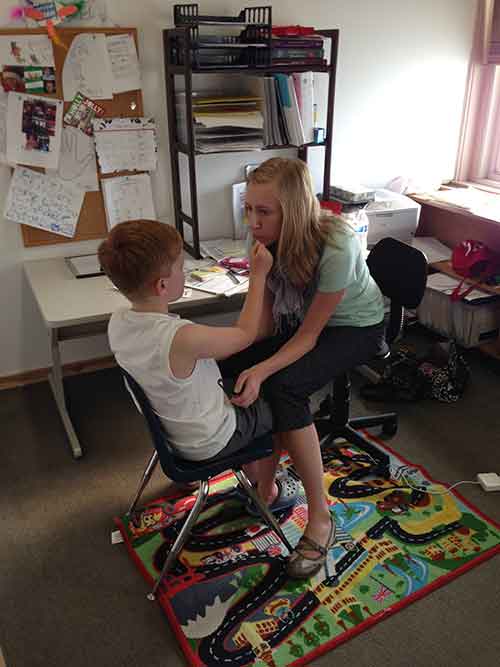
Bridgeway Academy is so proud of its thirty-one (31) Music, Occupational, Physical and Speech Therapists who provide services both the students enrolled in Bridgeway Academy’s Education Center as well as for those who come to the Therapy Center strictly for therapeutic services. All departments integrate seamlessly into the school day as well as collaborate with each other and the classrooms, providing Bridgeway Academy’s students a strong foundation for learning. Our therapy departments have been hard at work receiving specialized training, presenting or attending regional, state and national conferences and providing the best therapy services available in central Ohio, supporting our mission to meet the educational and therapeutic needs of children with autism and other developmental disabilities.
Physical Therapy
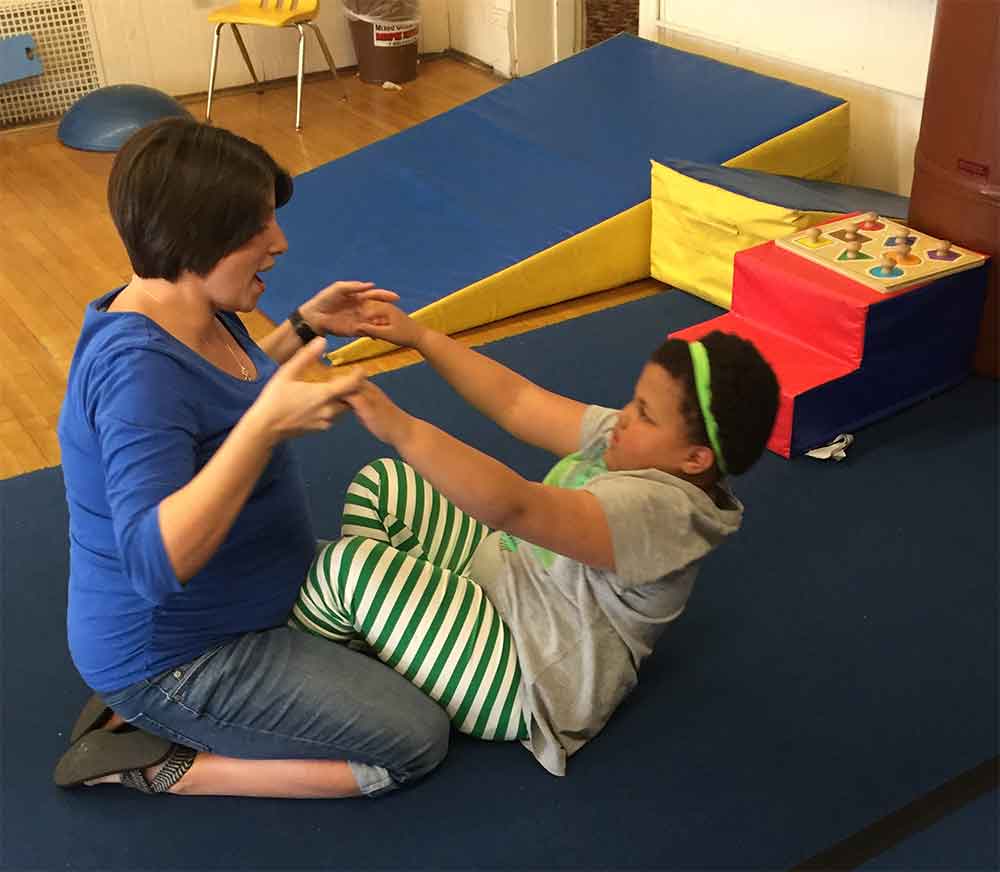
Recently, two of our physical therapists attended a course titled “Core Therapy, Functional Movement with Balls, Bands & Balance.” This course highlighted the importance of having a strong core to help promote and facilitate functional movement! The therapists were also provided a plethora of different exercises to incorporate into therapy sessions using therapy balls and resistance bands.
Occupational Therapy
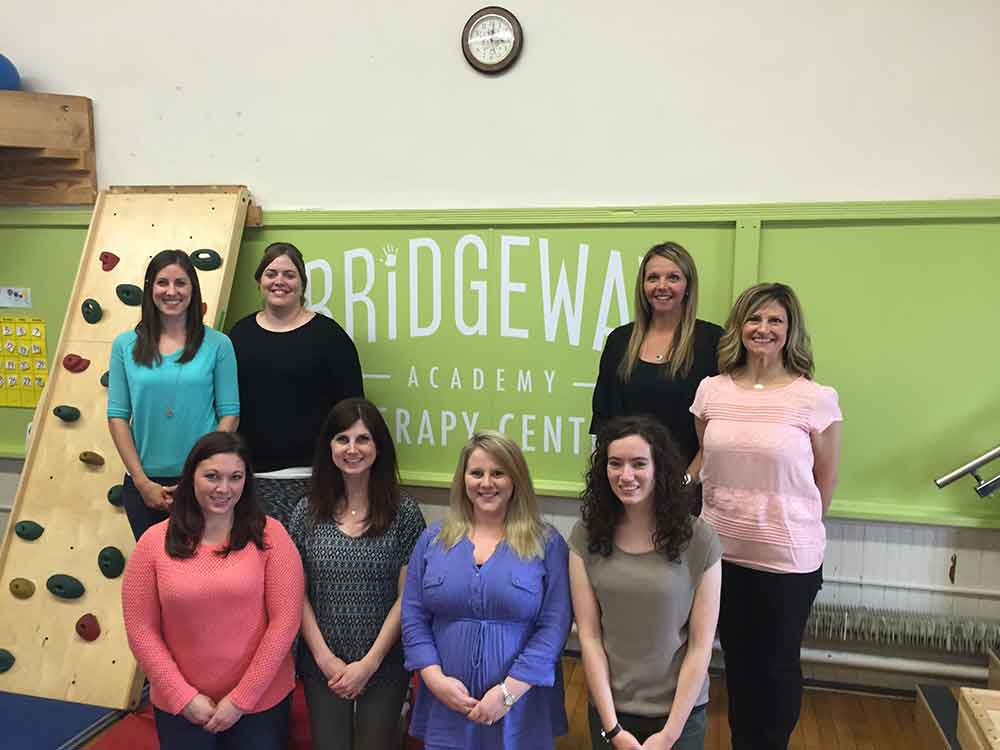
Bridgeway Academy’s Occupational Therapists (OT) further their education by attending classes of interest. Recently, Ashlee Davis participated in the “Yoga 4 Classrooms,” workshop to learn how to integrate yoga into therapy sessions. Many students lack the skills required for self-regulation, impulse control, and overall body awareness. This class focused on how to recognize imbalance, stress, and how these factors effect behavior. Yoga 4 Classrooms was an interactive and worthwhile experience that expanded Ashlee’s knowledge and will help create a positive school environment.

Leslie Murdock and Lara Pytlik attended two classes together: “Sensory Integration- Assessing & Treating Kids When Formal Testing Isn’t Possible,” and “AOTA Fieldwork Educators Certificate.” Many students lack the skills required to remain focused and follow directions. Leslie and Lara attended the sensory integration class to expand their knowledge of sensory-based disorders and to select appropriate treatment goals to improve these skills. The fieldwork class is designed to enhance fieldwork experience for students attending OT school. Leslie and Lara learned new strategies and activities to provide a high-quality fieldwork opportunity through this course, as well as speaking with other OT’s in attendance.

Kim Kay recently attended the PLAY project conference to learn more about this approach.  Bridgeway Academy is so proud of its OT’s for the passion they have in learning more about this profession!
Speech-Language Pathology
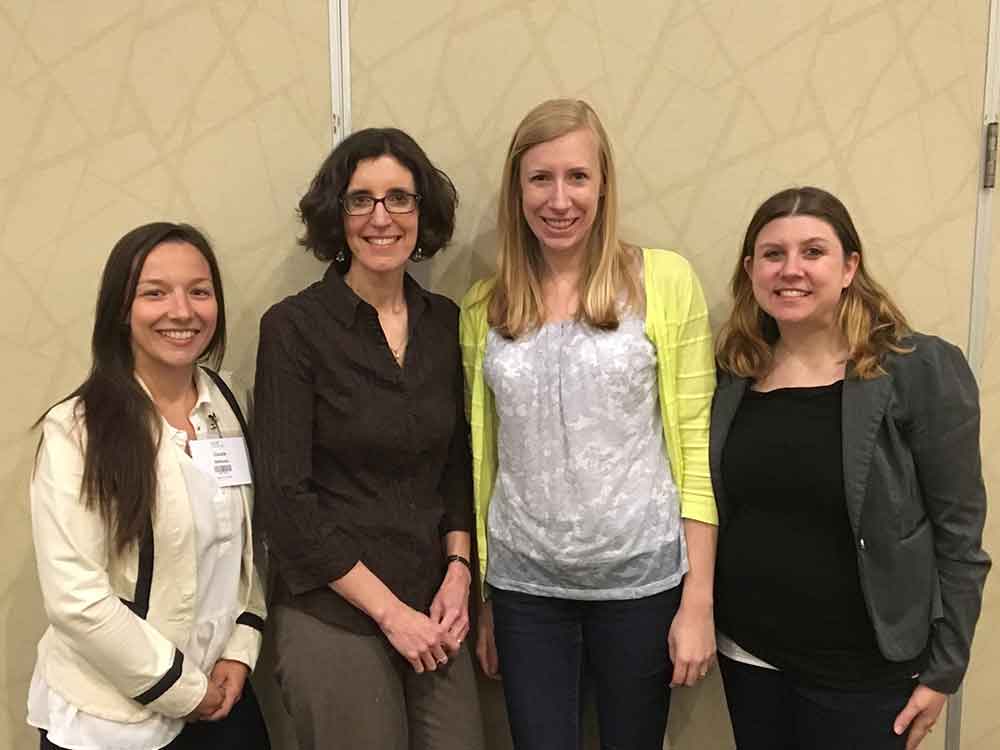
In April, 2016, Bridgeway Academy’s speech department participated in Social Thinking and Moving Forward with LAMP trainings.  The Social Thinking methodology addressed pragmatic skills at home, school, and in the community for individuals ages 4 and older.  This training was taught by the founder of Social Thinking, Michelle Garcia Winner.  Additionally, this curriculum parallels the common core/state standards.  Since the training, we have discussed implementing this curriculum in individual speech sessions, speech parties, and social groups for both education and therapy center students and clients.
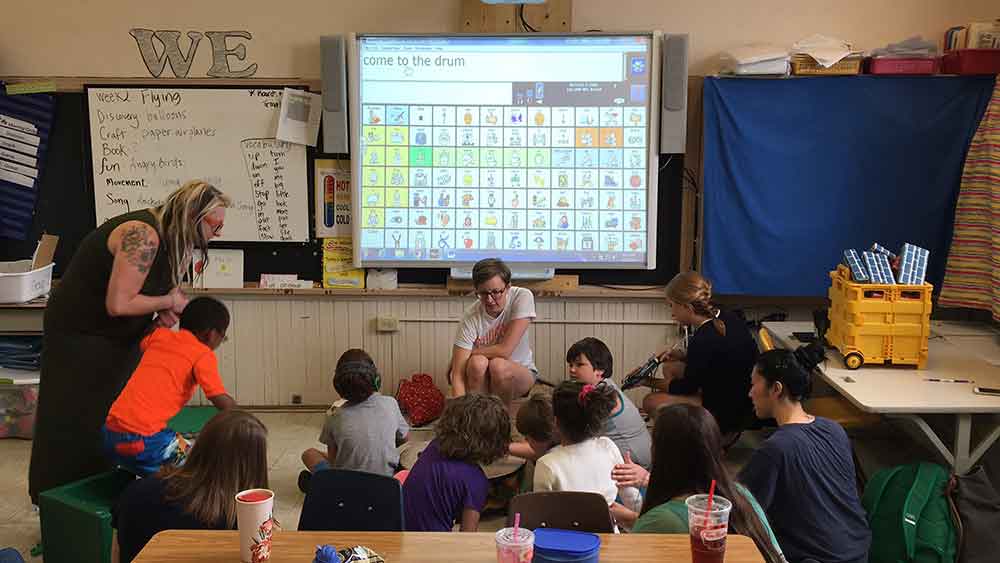
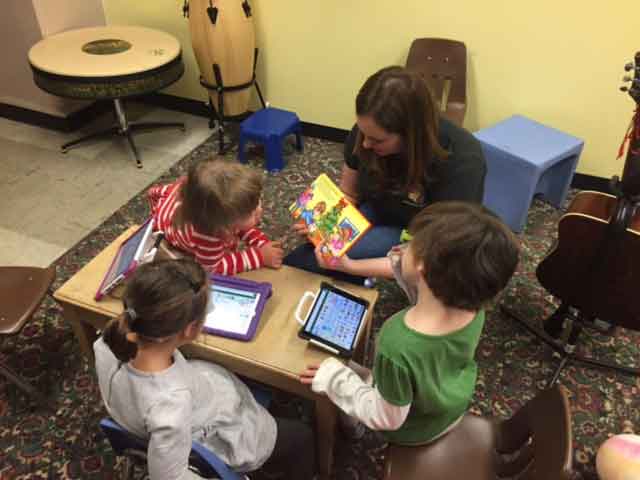
The LAMP course offered hands on experience with AAC devices and was taught by the author of the LAMP approach, John Halloran.  By learning how to quickly set up and program devices in a variety o
f settings and exploring new strategies for teaching LAMP, the speech department is more equipped to meet the individual needs of our students.

To learn more about all of the Therapy Services offered at Bridgeway Academy, including Music Therapy and Psychological Services, please visit: https://bridgewayohio.org/programs-services/therapy-center/
Written by alex · Categorized: Uncategorized

May 13 2016

May is Better Speech and Hearing Month!

Bridgeway Academy’s therapy department includes a team of twelve speech-language pathologists – SLPs – who strive to meet the therapeutic needs of the students and clients who attend or visit Bridgeway Academy each day, in many ways outside of traditional, individual speech therapy. At Bridgeway Academy, speech therapy extends far beyond working on speech sounds and answering “WH” questions.  Though these skills are commonly addressed in speech therapy at Bridgeway Academy and elsewhere, the roles and responsibilities of a speech-language pathologist include a variety of other areas related to speech and language.

The American Speech and Hearing Association (ASHA), the governing body of the field of speech-language pathology, defines a Speech-Language Pathologist as, “… the professional who engages in professional practice in the areas of communication and swallowing across the life span. Communication and swallowing are broad terms encompassing many facets of function. Communication includes speech production and fluency, language, cognition, voice, resonance, and hearing. Swallowing includes all aspects of swallowing, including related feeding behaviors.”

The team at Bridgeway Academy provides speech-language therapy services in individual therapy, small groups and whole class activities.  They work with students on a variety of skills ranging from articulation and language comprehension, to AAC (alternative and augmentative communication) use, social language skills, and even food acceptance.  Here are just a few of the unique ways that Bridgeway Academy’s speech department strives to provide the most effective and practical therapy for its students and therapy clients.


Individual Therapy Sessions

The SLPs at Bridgeway Academy spend much of their days in individual speech sessions in the speech room.  The SLPs have a lot of creative ideas for making speech fun, motivating, and rewarding!  Individual speech therapy sessions allow the therapist and child to focus on building and improving their speech and language skills in the specific areas that the child needs most.  Individual sessions can incorporate a variety of techniques to teach a wide range of skills, including articulation and use of PROMPT technique, use of AAC devices – specifically incorporating LAMP Words for Life – for non-verbal students, and developing problem solving skills while incorporating programs like Social Thinking.  Individual therapy sessions can also focus on teaching general language skills, through both play and structured academic-style tasks, like answering WH questions, following directions, auditory processing, and developing first words and core vocabulary.


Push-in Sessions

The Bridgeway Academy SLPs also spend time with individual students within the students’ classrooms, and push-in sessions are just as important as pull-out sessions.  Push-in sessions allow students to continue to work on developing their speech and language skills in a functional setting, and incorporating those skills, previously targeted in individual therapy, into their daily routines and academic tasks.  SLPs can support students with direction following, understanding the vocabulary in an academic activity, supporting students in social and group activities, and encouraging AAC device use within the classroom.  Many of the Bridgeway Academy SLPs accompany older students on community outings, assisting them in building their language skills and improving their communication with others outside of a familiar setting.

Speech Parties

Speech Parties are another way to continue to promote speech and language development in the classroom.  During speech parties, the SLPs lead whole class activities, most often promoting development of social language skills among the students within the classroom.  Speech party activities can target skills ranging from verbal and non-verbal turn-taking, to describing a mystery item to a peer.  Speech parties allow students to learn and interact through fun and games, while – sometimes unknowingly – building their language skills and social interactions.


Co-Treats

The Bridgeway Academy therapy department is made up of a large team of Music Therapists, Occupational Therapists, Physical Therapists, Psychologists, and Speech-Language Pathologists.  Whether they are encouraging a child to request “more” while swinging during PT, incorporating language concepts into an OT activity, working on speech sounds while singing during music therapy, or working on social and emotional language along with a psychologist, the SLPs at Bridgeway Academy love having the opportunity to co-treat with all of these disciplines to better meet the needs of their students.

Groups

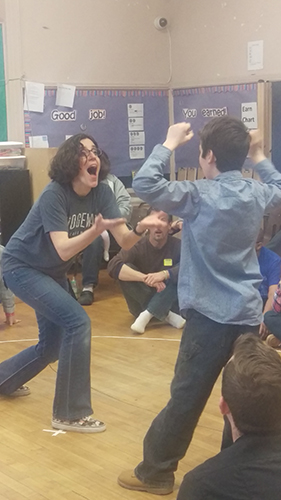
The Bridgeway Academy SLPs provide speech therapy in a variety of group settings throughout the school days.  Teaming up with the music therapy department, the speech department participates in a variety of groups to promote development of social skills for students of all ages.  The speech and music teams are involved in social groups for school-age students, along with weekly theater groups for older students, and an AAC group for younger students who use communication devices.  These groups provide students with the opportunity to develop language and social skills and encourage interactions, with both familiar and new peers, in a setting that is quite different from an individual therapy session.

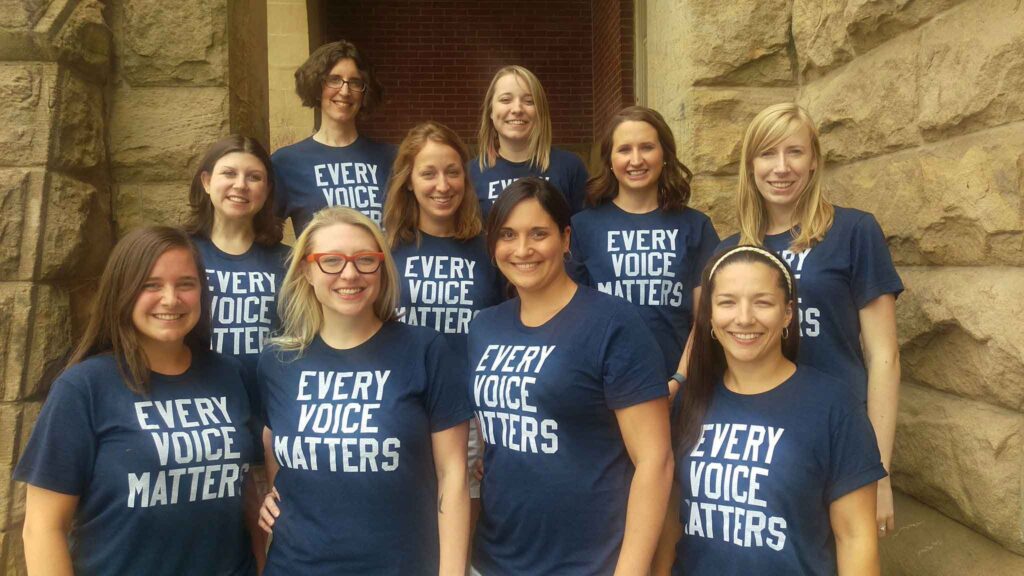
The speech team takes pride in being a part of such a collaborative organization that values communication of all kinds, and remembers that every voice matters.  If you have questions about speech therapy at Bridgeway Academy, or about ways to promote speech and language outside of the speech room, contact the speech department – or your child’s/classroom’s Speech-Language Pathologist.   Happy Better Speech and Hearing Month!

Written by alex · Categorized: Uncategorized

Apr 30 2016

The Reasons Why

If you joined us at Raise Your Glass to Raise Awareness, you know the theme of the event was, “The Reasons Why.”  Thanks to our good friends at Brainstorm Media, we unveiled  a new video that features our staff, parents and students, all who give their reasons: “Why Bridgeway Academy.”


Written by alex · Categorized: Uncategorized

Dec 30 2015

SPIN for Camp Bridgeway – Sunday, February 28, 2016

Participate in one of six SPIN classes with some of central Ohio’s best spinning instructors at Flow Studio, 519 Lazelle Road, Westerville.

All classes are 60 minutes with a 15-minute break in between. 20 spots are available for each session.

Registration is $30 for the 1st SPIN and $15 each additional SPIN and includes a tech shirt, water and snacks.

Session Time Instructor Style
#001 9:00am Yvette and Beth RPM
#002 10:15am Angi O. and Kristy Freestyle / RPM mash-up
#003 11:30am Jim and Cheryl RPM
#004 12:45pm Amory Freestyle
#005 2:00pm Angie and Theresa Freestyle
#006 3:15pm Lynda and Laurie RPM

(A 7th SPIN class taught by Shelley Meyer may be added in January – join the event Facebook
page to stay up-to-date with information: https://www.facebook.com/events/512359028971265/).

FOR ADDITIONAL INFORMATION OR TO REGISTER, download the registration form here and mail, fax or email to:

Bridgeway Academy
SPIN for Bridgeway Academy
2500 Medary Avenue
Columbus, OH 43202
614-262-7540 (fax)
cargiro@bridgewayohio.org

Or call 614-262-7520 to register with a credit card over the phone.

SPIN is a fundraising event to support Bridgeway Academy, a non-profit organization with a
mission to meet the educational and therapeutic needs of children with autism and other developmental disabilities.Funds raised will support the organization’s summer camp program, providing much needed recreational and academic programming for students with autism and other developmental disabilities.

Written by alex · Categorized: Uncategorized

Dec 15 2015

Bridgeway Academy and Local Matters

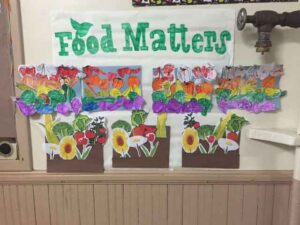
This school year Helping Hands Center / Bridgeway Academy has partnered with Local Matters to incorporate the Food Matters curriculum into our weekly health and science lessons.  Food Matters is a 24-week food and ecology curriculum that provides children with an understanding of what healthful food is, where it comes from, how it grows, and how it’s prepared.  “Food Matters’ holistic, multicultural and multi-sensory approach is unique among children’s nutrition education. The lessons give kids a language to talk about food, and help them understand the relationship between food and strong bodies. Kids emerge from the course with an appreciation for fresh, healthy foods, which serves as a foundation for lifelong healthy eating habits.” www.localmatters.org

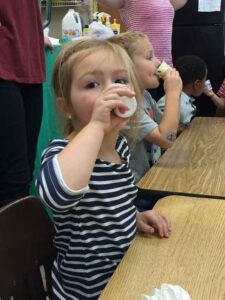
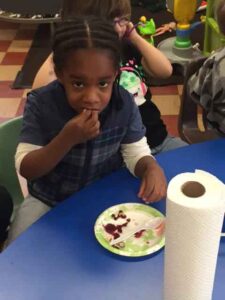
Classroom teachers and members of the Food Acceptance Team are leading lessons one time a week for 30-60 minutes.  Classroom teachers are also carrying over the vocabulary and content from these lessons into other lessons throughout the week.  Check out what we’ve been eating and learning about!

Week 1: Food Matters.

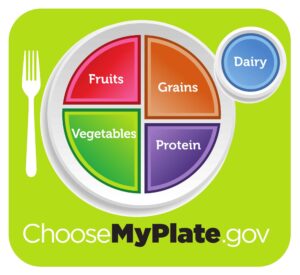
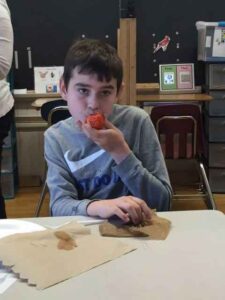
We learned about the USDA MyPlate food guide for making healthful food choices.  With the MyPlate we can categorize foods as fruits, vegetables, proteins, whole grains or dairy.  We also learned the importance of hand washing before food prep and eating with a catchy song.  The whole food we tasted this week was pears.

The Hand Washing Song

By Monique McCoy

First we squirt the soap. Then we rub, rub, rub.

We lock our fingers tight and we scrub, scrub, scrub.

We rinse them on the front and we rinse them on the back;

We say bye-bye to germs because they’re gone like that!

Week 2: What do Plants Need to Live?

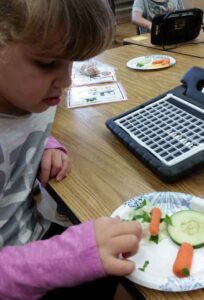
Plants are living things, an important source of food for humans and need food, soil, sunlight and water to live.  Many classrooms planted seeds in cups of soil, watered them and put them by a window to get sunlight.  We discussed plants that are also foods such as fruits and vegetables.  We also started taking leftover food out to a compost bin to create food for the plants in our on-site garden.  Key vocabulary related to week 2 includes: plants, food, air, water, shelter, sunlight and compost.  Week 2 we started food prep by making a fresh herb tofu dip to eat with carrots and cucumbers.


Week 3: Farms and Farmers.

During week 3 lessons we identified farms as important sources of food and learned about the great variety of foods produced in Ohio.  Ohio farmers grow and produce more than 200 crops and products!  We discussed the difference in appearance between vegetables from grocery stores and vegetables from local farmers markets.  Classrooms got hands on experience “harvesting” carrots from soil and cleaning them to prepare for eating.  Key vocabulary this week included healthful foods, harvest and local.  The whole food we tasted was roasted carrot.  Carrots were sliced and roasted with olive oil and salt.

Week 4: Gardens.

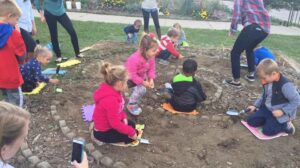
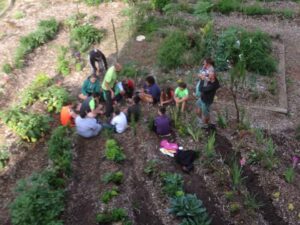
Students learned that food is grown in gardens.  We took trips out to our on-site garden and used garden tools to dig in the dirt and harvest a few vegetables.  Students also learned that gardens are not just for food but also for beautifying outdoor spaces.  Vocabulary related to week 4: gardens, community gardens, gardening gloves, spade, and watering can.

Students tasted a garden salad consisting of lettuce, shredded carrots, sliced cucumbers, sliced tomatoes and shredded cabbage.  Preparation included tearing the lettuce, cutting the tomatoes and making a vinaigrette salad dressing.

Food prep: Vinaigrette

Week 5: Food Medicine.

Students learned that foods we eat affect our health. Raw and lightly cooked fruits and vegetables have high amounts of Vitamins A, B, C, D, E and K.  Students know that different brightly colored fruits and vegetables contain vitamins that are beneficial to our bodies.  Vocabulary related to week 5: vitamin, medicine, smoothie, and healthful.  We all tasted a green smoothie made from spinach, peaches, bananas, cucumbers and apple juice.

Week 6: Whole and Processed Food Comparisons.

This week, students learned the difference between whole and processed foods.  We looked at packaging and ingredients to determine if foods are whole or processed.  Students classified whole foods as “all the time food” and processed food as “sometimes food”.  We related this week’s lesson to the previous week by reviewing the vitamins our bodies get from whole “all the time” food.  Vocabulary related to week 6: all-the-time food, sometimes food, processed, whole, and food label.  Students tasted roasted potatoes prepared with olive oil and salt.

Week 7: Eating with our senses: edible sculptures.

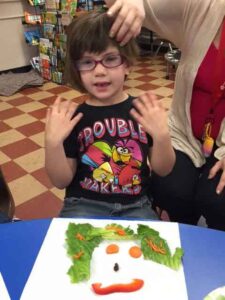
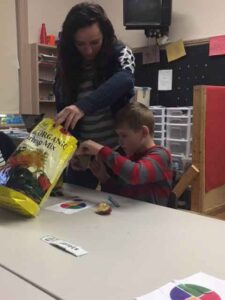
Students learned to appreciate the beauty of colorful whole foods, using color and shape to inspire them to appreciate the aesthetics of the foods they eat.  Food can be both nutritious and visually appealing.  We all use more than just our sense of taste when eating.  We look at, smell and often touch food!  Vocabulary related to week 7: senses, touch, taste, smell, hear, see, and food art.  Students created sculptures and pictures with shredded and sliced carrots, sliced red pepper, grapes, lettuce, sliced bananas, dried cranberries and raisins.  They were encouraged to taste their food as they explored with their other senses.

Week 8: Seasons.

This week students learned that Ohio experiences four seasons each year.  We reviewed the concept of growing and harvesting times, and that foods have their own growing and harvesting season.  Many foods in Ohio are harvested in the fall. As a supplemental activity, many students created leaf art by rubbing paper over a leaf with a crayon.  Vocabulary related to week 8: summer, spring, winter, fall, harvest, seasons, and kale. Students tasted baked kale chips prepared with olive oil and salt.  The kale chips were surprisingly a huge hit!

Week 9: Eating Locally All Year Long: Preserved Foods.

Students learned that foods grown in gardens and on farms in Ohio during summer and fall can be preserved and eaten during the winter.  We discussed canning, freezing and drying to help us eat locally all year.  Vocabulary related to week 9: canning, drying, freezing, preserving, cold, sour, sweet and cranberries.  Students tasted cranberries four ways: whole, frozen, dried and canned!


Week 10: Ohio Fall Fruits: Apples.

During week 10 students learned that apples and pears are fruits and are in season during the late summer and fall.  We discussed different varieties of Ohio apples, their colors and how they taste.  Many students read books about orchards and trees where apples and pears grow.  An important fact that we’ve repeated all ten weeks is “fruits have seeds!”  Vocabulary related to week 10: apple, pear, fruit, seeds, and orchard.  Students tasted three types of apples: fuji, golden delicious and granny smith.

Week 11: Healthful Fats and Oils.

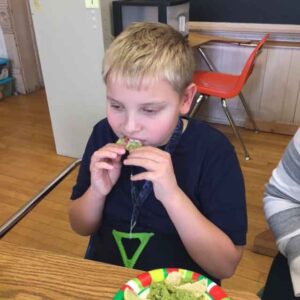
Students learned the importance of eating healthful fats and how to classify healthful vs. harmful fats.  Healthful fats are important for our heart and brain.  Some classrooms experimented with straws to learn how healthful and harmful fats move through our arteries.  Vocabulary related to week 11: arteries, blood, brain, heart, fats, healthful, and processed.  Students helped teachers and therapists prepare guacamole with a healthful fat, avocado. 

The first half of the Food Matters lessons has been so fun.  We’ve received a lot of great feedback.  Mr. Ramsey, a teacher in the Coyote class, stated, “Every single one of my students has tried every single food except when they were absent.”  Mr. Adam in the Cheetahs said, “I have had 3 separate parents tell me that they have seen a real difference in what their child is willing to try at home. They aren’t eating a whole meal of new things but they aren’t refusing to take bites of things like they had before”.  Lindsey Cargill, a speech-language pathologist, has two sons in preschool.  She stated that one of her son’s dreads coming to school on Local Matters days, but he always tries every new food and excitedly runs to tell her after the lesson. 

As you are carrying over the vocabulary at home, remember to keep it fun and encourage trying new foods with our key phrases:

  • “It’s my favorite” or “it’s not my favorite”.
  • “Take one bite/taste, then you can say no thank you if it’s not your favorite”.

We can’t wait to start the second half after winter break!

This project has been funded, in part, by the Reinberger Foundation. We are grateful for their support.

Written by alex · Categorized: Uncategorized

  • « Go to Previous Page
  • Page 1
  • Interim pages omitted …
  • Page 7
  • Page 8
  • Page 9
  • Page 10
  • Go to Next Page »

Bridgeway Academy
1350 Alum Creek Drive
Columbus, OH 43209
614.262.7520

Privacy Policy

Equal Opportunity Employer City of Columbus Franklin County Board of Commissioners

Donate Now
Facebook Link Instagram Link Twitter Link Youtube Link LinkedIn Link
The Yass Prize