• Skip to main content
Bridgeway

Academy and Therapy Center

  • Who We Are
    • Organizational Leadership
    • Bridgeway Value Awards
    • Testimonials
    • Community Partnerships
    • FAQs
    • Contact Us
    • News
  • Events
    • Bridgeway Golf Scramble
    • AmazeAbility: 20 Years of Possibility!
  • Make a Difference
    • Scholarship Granting Organization
    • Donate to Bridgeway
    • Planned Giving
    • Amazon Wishlists
    • Champions, Heroes and Superheroes
    • Bridge Builder Awards
    • Volunteer Opportunities
  • For Parents
    • Prospective Parents
    • Attendance Form
    • Wait List
    • Enrollment Application
    • Autism Scholarship & Other Funding Opportunities
    • Current Parents/PTA
    • Resources
    • Calendar
  • Blog
  • We’re Hiring
  • Bridgeway Academy
    • Preschool Program
    • Peer Model Program
    • Elementary
    • Academic Program
    • Applied Program
    • Life and Vocational Skills
    • B.R.I.D.G.E. To Adulthood
    • Summer Program
    • Before/After Care
  • Bridgeway Therapy Center
    • AAC Evaluation Center
    • Family Partnership & Crisis Stabilization
    • Clinical ABA
    • Music Therapy
    • Occupational Therapy
    • Physical Therapy
    • Mental Health & Psychology
    • Speech Therapy
  • Donate

alex

Sep 19 2016

Bridgeway Academy Training Initiatives

Bridgeway Academy began the 2016-17 academic year with 150 highly-trained and educated full-time staff members – classroom teachers, supervisors, music, occupational, physical and speech therapists, psychologists – and the administrative personnel necessary to support the growing needs of Bridgeway Academy’s staff and families. To ensure the educational and therapeutic staff members are following the latest evidence-based principles, Bridgeway Academy provides trainings and professional development for its employees throughout the year.
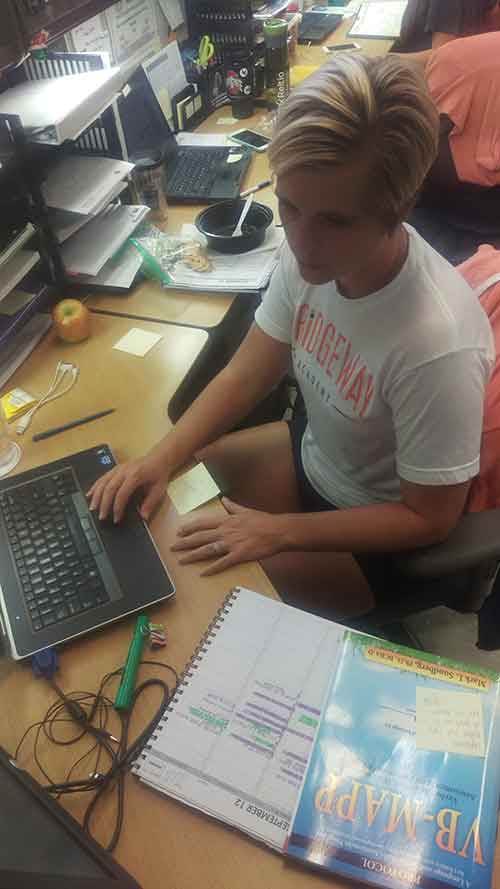
Jenn Schneider, BCaBA, recently took on the role as Training Coordinator at Bridgeway Academy. Among her numerous other responsibilities, she collaborates with the many specialists at Bridgeway Academy to develop a thorough and effective internal training program to help staff better promote student growth and consistency of service delivery. Jenn recently shared some training data that illustrates Bridgeway Academy’s commitment to maintaining a highly trained staff in order to support its mission to meet the educational and therapeutic needs of children with autism and other developmental disabilities.

  • During the week prior to the beginning of the 2016-17 academic year, returning Bridgeway Academy staff participated in an average of 18-hours of training in areas such as applied behavior analysis, crisis intervention, reinforcement, ethics, discrete trial instruction, assessment tools such as AFLS/VB-MAPP/common core, communicable diseases and emergency response procedures.
  • Staff new to Bridgeway Academy participated in an average of 14 hours of training in areas such as applied behavior analysis, crisis intervention, mandated reporting professionalism, reinforcement, ethics, discrete trial instruction, assessment tools such as AFLS/VB-MAPP/common core and emergency response procedures.
  • New staff, within their first 90 days of employment, will also complete an additional 6 hours of training in subjects including: teaching techniques, preference assessments, classroom structure and support, data collection and advanced applied behavior analysis.
  • Bridgeway Academy receives oversight for its program from the Ohio Department of Jobs and Family Services. ODJFS requires non-certified staff to receive 45-hours of training within their first three years of employment. Certified staff participates in an average of 25 hours of training per year to ensure efficacy with the evidence-based principles utilized at Bridgeway Academy.
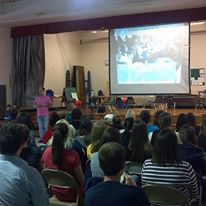
Bridgeway Academy’s Continuing Education committee is made of up staff members who are tasked with offering monthly trainings in subjects of particular interest including but not limited to: IEPs and ETRs, Language Acquisition through Motor Planning (LAMP) and Lesson Planning and Curriculum.

  • Bridgeway Academy has a goal to ensure that all of its students reach their highest potential and knows that having a highly-trained and experienced staff is one of the ways this goal will be accomplished. Today, the organization has on staff: thirty (30) music, occupational, physical and speech therapists; two (2) psychologists ; six (6) Board Certified Behavior Analysts (BCBA); two (2) Board Certified Assistant Behavior Analysts (BCaBA); thirteen (13) Registered Behavior Technicians; and six (6) staff members with a Doctoral Agree and above; thirty-nine (39) staff members with a Graduate Degree.
  • Currently, Bridgeway Academy has five staff members undergoing supervised fieldwork towards board certification as a behavior analyst; three staff members eligible to sit for their board examination as a behavior analyst; and, one staff member working towards board certification as an assistant behavior analyst.

To learn more about Bridgeway Academy and all of its programs visit http://www.bridgewayohio.org.
Written by alex · Categorized: Uncategorized

Aug 31 2016

Two BIG September Events!

Labor Day is behind us and the academic-year is in full-swing. As we move into fall, Bridgeway Academy is participating in two events in September that are important to our community!

Walk Now for Autism Speaks – Sunday, September 18
Walk Now for Autism Speaks Columbus will take place on Sunday, September 18 at The Columbus Commons. Autism Speaks Walk, the world’s largest fundraising event to support the diverse needs of the autism community, is a grassroots movement powered by parents of children on the autism spectrum. Funds generated as a result of this event fuel innovative research and make connections to critical lifelong supports and services. Bridgeway Academy is proud to support this event as a participant in the resource fair (come get a balloon and a tattoo!) and hosting a team.

The schedule of events will be:

9:30am                                     Registration opens

9:30 – 11:30am                   Kids Activities and Resource Fair

11:30am                                  Program

12:00pm                                 Walk begins through downtown Columbus

Participation in the event is free and registrants are encouraged to fundraise for Autism Speaks. To learn more about the event, go to: http://www.autismspeakswalk.org/faf/home/default.asp?ievent=1155623

To register as a Bridgeway Academy team member, go to: http://www.autismspeakswalk.org/faf/search/searchTeamPart.asp?ievent=1155623&lis=0&kntae1155623=4B8A15F851CC41BB90176014263FD34A&team=6711914


2016 Arts & Autism Conference: Creating, Learning Living – Tuesday, September 20
The 2016 Arts & Autism Conference: Creating, Learning, Living, will take place on Tuesday, September 20 from 8am – 5pm at the Columbus Museum of Art. This is the only statewide convening of its kind where individuals from around the country will gather to share best practices, arts experiences, new ideas, and unique narratives, all focused on how to make the arts and arts education accessible for individuals with autism, and their families. The conference will bring together individuals with autism and their families, cultural administrators, practitioners, therapists, educators, and students who specialize or have an interest in the intersection of arts and autism.

Bridgeway Academy is proud to be a sponsor of this event, as well as a member of the planning committee. Additionally, Bridgeway Academy staff will be presenting during the conference and Brady Smalley’s art work is the conference’s “brand.”

Other highlights of the conference will include a keynote address by Michael Bongiorno, a noted design leader with a focus on impacting community through design. A self-advocacy panel discussion during lunch will feature three young-people actively engaged in the arts in Columbus.

Registration is $100 for professionals (with a certification of attendance for 7 hours), $88 for a community member, and $75 for students and includes continental breakfast, lunch, refreshments, and parking.  Scholarship support is available courtesy of Central Ohio Autism Society. To learn more or to register for the 2016 Arts & Autism Conference: Creating, Learning, Living

visit www.vsao.org/artsautismconference2016.

The 2016 Arts & Autism Conference: Creating, Learning, Living is an outcome of the Arts & Autism in Ohio Initiative and presented by VSA Ohio and the Columbus Museum of Art with sponsorship provided by the Ohio Arts Council, the Greater Columbus Arts Council, Puffin Foundation West, Ltd, the Ohio Alliance for Arts Education, the Autism Society of Central Ohio, Bridgeway Academy and The Ohio State University Center for Autism Services and Transition.

Bridgeway Academy is a non-profit organization in Columbus, OH with a mission to meet the educational and therapeutic needs of children with autism and other developmental disabilities. To learn more about Bridgeway Academy or to make a donation, go to: bridgewayohio.org.

Written by alex · Categorized: Uncategorized

Aug 19 2016

Are you sleeping well?

By Psychology Department

As you look to set your child up for success this school year, be sure to not overlook one crucial area: sleep.

It is estimated that as many as 80% of children with Autism Spectrum Disorder (ASD) have difficulties falling asleep and/or staying asleep.  Additionally, chances are that your child has drifted away from his or her school-based bedtime routines due to the more leisurely pace of summer. Sleep is the glue that holds everything together and has important benefits not only for physical well-being, but also for learning, behavior, and emotional development. In addition to increased daytime drowsiness, a poor sleeper may be more irritable, short-tempered, emotional, hyperactive, aggressive, and/or have difficulty learning new skills. Conversely, well rested children (as well as teens and adults) are more even tempered, adaptable, alert, ready to learn, and have a higher tolerance for frustration.

The average hours of sleep needed by children varies across ages. Children ages 1-3 typically need 12-14 hours, ages 3 to 6 need 10-12 hours, and ages 7 to 12 need 10-11 hours. Teens typically need 8 to 10 hours of sleep each night. For young children, these sleep guidelines also include naps. Most children do not nap after the age of 5, although some continue to require naps. Naps should be well-timed, as those that are too long or too close to bedtime may interfere with the quality of nighttime sleep. Additionally, naps intended to make up for lost nighttime sleep may further disrupt the sleep-wake biological rhythm. Despite these guidelines for sleep, it’s important to remember that each child is an individual, and he/she may need more or less sleep. Observations of your child’s behavior may help you to determine whether you need to adjust their sleep schedule. For example, a child who becomes more irritable or hyperactive in the evenings may actually need an earlier bedtime.
Fortunately, if your child is not sleeping well, behavioral and environmental changes often help. Here are some tips:

  • Limit screen time close to bedtime. Tablets, phones, and computers can be especially disruptive to sleep due to the proximity to the user’s eyes. Turn these devices to “night mode” in the evenings when possible. It is also best to not have electronic devices (used for entertainment purposes) in the child’s bedroom.
  • Avoid sugary snacks and drinks (including caffeine in chocolate and sodas) in the evenings.
  • Get some exercise after school, but avoid stimulating activities too close to bedtime.
  • Establish a calming and predictable bedtime routine lasting about 20-30 minutes that includes relaxing activities such as reading and listening to soothing music. Dim the lights in the room during these routines. Incorporating relaxation techniques such as deep breathing and yoga may also be helpful. Your child’s psychologist can also help teach more advanced techniques such as progressive muscle relaxation.
  • It may be helpful to create a visual schedule for your child to follow each evening, which outlines his or her routine. Your child’s PBS or psychologist can assist in developing such schedules.
  • Try to be as consistent as possible in implementing bedtime routines. Keep bedtimes and wake-up times as consistent as possible, even on weekends.
  • Create a restful sleep environment by keeping your child’s bedroom cool, dark, and quiet. Use of a white noise machine, calming music, etc. can help drown out household noises as well as have a calming effect at bedtime.
  • If you find your child needs to adjust their bedtime or wake-up time, try moving these times 15 minutes earlier each day or every few days until your child has adjusted.
  • If your child is continually resisting their bedtime, then reward systems may help. For example, your child may get to pick from a treasure box in the morning if they followed their bedtime routine in a cooperative manner and went to bed on time. Contact your child’s PBS or psychologist for assistance in designing such systems.

If your child is still experiencing difficulty falling/staying asleep despite your best efforts, it will be important to consider whether an outside variable is affecting your child’s sleep.  Variables may include but not be limited to sleep apnea, sleep walking, sleep terrors, restless legs syndrome, anxiety, or depression.  Talk to your child’s pediatrician or psychologist if you continue to have concerns after putting a consistent schedule in place or if you need further guidance in implementing sleep strategies. Your child’s pediatrician can also further evaluate the quality of your child’s sleep and provide advice on whether supplements (e.g., Melatonin) or sleep medications may be helpful if difficulties persist.

References and Further Reading:

https://www.autismspeaks.org/family-services/health-and-wellness/sleep

http://www.webmd.com/brain/autism/helping-your-child-with-autism-get-a-good-nights-sleep#2

https://sleepfoundation.org/

Written by alex · Categorized: Uncategorized

Aug 12 2016

Program Expansion at Bridgeway Academy

In less than a week, Bridgeway Academy will begin its 12th school year with 150 staff members and 155 students, early-intervention / preschool through 10th grade!  We are looking forward to an outstanding 2016-17 academic year with many fun and engaging activities planned throughout the year!

Bridgeway Academy is excited to share news about the growth of its programs, too. We continue to work hard to develop programming that meets the changing needs of our students, especially for students entering middle and high school. Educational goals for these students include transition planning from students into young adulthood.

In January 2015, Bridgeway Academy opened its Life Skills Center, a space where middle and high school students work on life skills in a natural environment. This program has provided students with the opportunity to practice skills like cooking, cleaning, laundry and leisure skills, with the support of their teachers and therapists who work to apply and generalize their educational goals across this setting.

This year, Bridgeway Academy opens a Vocational Skills Center. The Vocational Skills Center will be located in the community room of a neighborhood church. Bridgeway Academy is leasing this space so that students will have plenty of room to build skills for employment and independence later in life. Students will work with teachers and therapists on pre-vocational skills. An internship program with local businesses is in development so that students will be able to generalize learned skills in a natural environment. We continue to seek partnerships for the internship program. If you have connections with individuals or businesses that would like to participate in this kind of opportunity, please let us know. We’d also like to thank Huntington National Bank for their financial support of this program.

Bridgeway Academy’s goal is to help every student reach their highest potential as we work together to build the bridge from home to school, to the community and beyond. We look forward to an outstanding year in support of Bridgeway Academy’s mission to meet the educational and therapeutic needs of children with autism and other developmental disabilities.

Written by alex · Categorized: Uncategorized

Jul 14 2016

Music Therapy in the Summertime: Camp Sing-Along

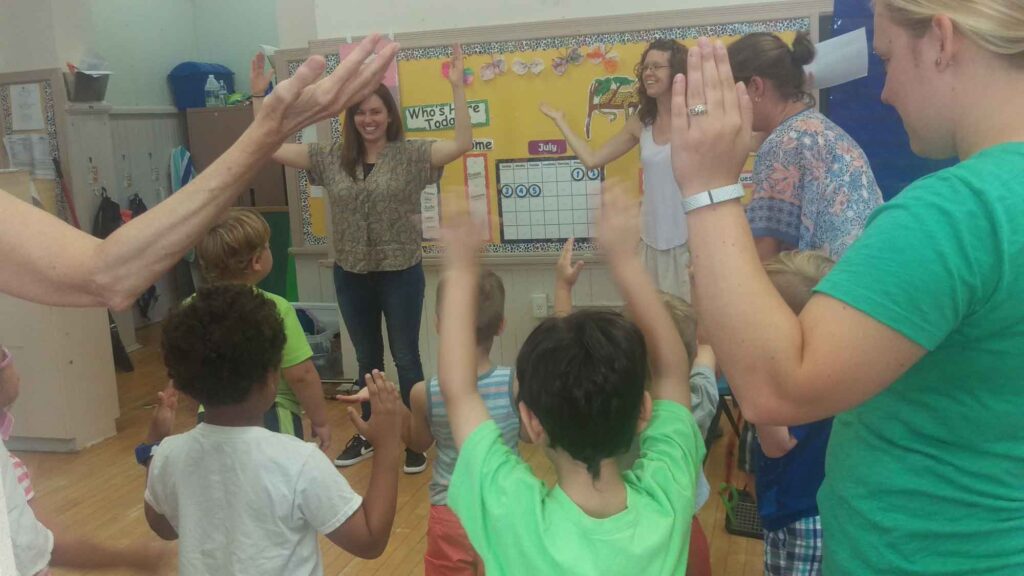
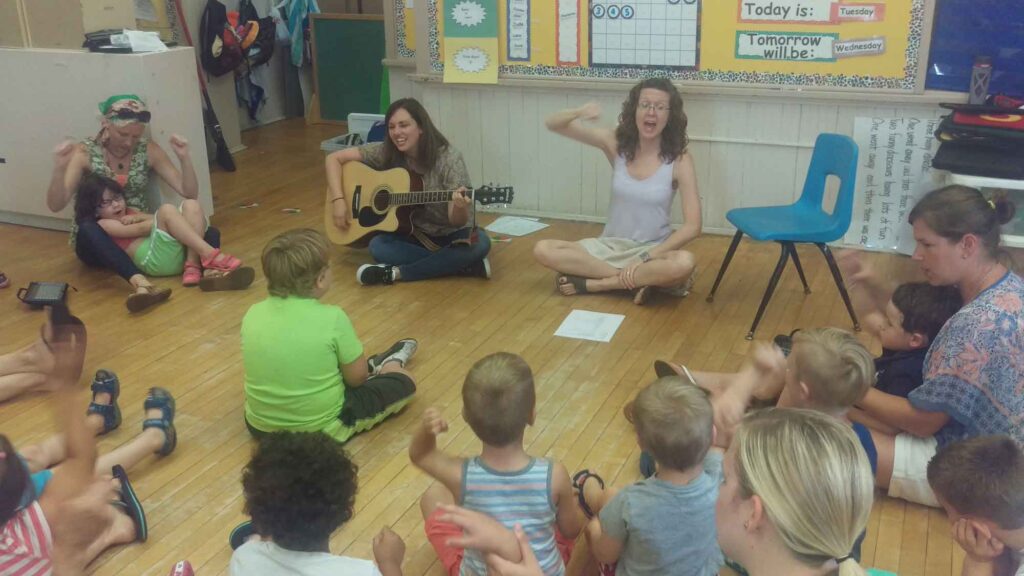
Part of the summer camp experience at Bridgeway Academy includes a half-hour camp sing-along for every classroom once a week. This summer Miss Liz and Ms. Kristin have been leading a variety of music activities, including echo songs, chants, finger plays, dances, and more.

History of Camp Sing-Along
The tradition of singing camp songs dates back to the late 1800’s. While it originated in camp gospel revival meetings, it has transformed throughout the years and now focuses on songs that are fun and easy to remember, instilling a sense of community and fostering positive relationships.

Camp Sing-Along at Bridgeway Academy
Camp sing-along at Bridgeway Academy is a large group music therapy setting and therefore targets many of the skills our students find challenging. As they participate in songs, chants, finger plays, dances, and clapping games, students become a part of their class and school community, focusing on positive social interaction. There is an emphasis on joint attention, thus promoting an awareness of the environment. Research shows that during group music therapy experiences students exhibit an increase in following directions, conversational skills, responsiveness, and eye gaze and eye contact.

Other skills that are targeted during large group music therapy are eye-hand coordination, problem solving, creativity and choice-making, persistence, self-control, keeping a steady beat, and listening. Almost all of these skills are targeted during one half-hour camp sing-along, and all of these skills are targeted using fun, playful activities that are easily remembered and reproduced in various settings.

If you have any questions about your child and camp sing-along, please feel free to contact Kristin Kummer, MT-BC (kkummer@bridgewayohio.org) or Liz Woolley, MT-BC (lwoolley@bridgewayohio.org).

Written by alex · Categorized: Uncategorized

  • « Go to Previous Page
  • Page 1
  • Interim pages omitted …
  • Page 6
  • Page 7
  • Page 8
  • Page 9
  • Page 10
  • Go to Next Page »

Bridgeway Academy
1350 Alum Creek Drive
Columbus, OH 43209
614.262.7520

Privacy Policy

Equal Opportunity Employer City of Columbus Franklin County Board of Commissioners

Donate Now
Facebook Link Instagram Link Twitter Link Youtube Link LinkedIn Link
The Yass Prize