• Skip to main content
Bridgeway

Academy and Therapy Center

  • Who We Are
    • Organizational Leadership
    • Bridgeway Value Awards
    • Testimonials
    • Community Partnerships
    • FAQs
    • Contact Us
    • News
  • Events
    • Bridgeway Golf Scramble
    • AmazeAbility: 20 Years of Possibility!
  • Make a Difference
    • Scholarship Granting Organization
    • Donate to Bridgeway
    • Planned Giving
    • Amazon Wishlists
    • Champions, Heroes and Superheroes
    • Bridge Builder Awards
    • Volunteer Opportunities
  • For Parents
    • Prospective Parents
    • Attendance Form
    • Wait List
    • Enrollment Application
    • Autism Scholarship & Other Funding Opportunities
    • Current Parents/PTA
    • Resources
    • Calendar
  • Blog
  • We’re Hiring
  • Bridgeway Academy
    • Preschool Program
    • Peer Model Program
    • Elementary
    • Academic Program
    • Applied Program
    • Life and Vocational Skills
    • B.R.I.D.G.E. To Adulthood
    • Summer Program
    • Before/After Care
  • Bridgeway Therapy Center
    • AAC Evaluation Center
    • Family Partnership & Crisis Stabilization
    • Clinical ABA
    • Music Therapy
    • Occupational Therapy
    • Physical Therapy
    • Mental Health & Psychology
    • Speech Therapy
  • Donate

alex

Feb 02 2017

Living Mindfully

By: The Psychology Department

The term “mindfulness” has gotten a lot of media buzz lately. Mindfulness has shown a range of benefits for adults and kids such as improved sleep, focus, concentration, anxiety management, emotion regulation, and quality of relationships (e.g., Burdick, 2014). It is also becoming a widely accepted part of therapy to address conditions such as anxiety, depression, and ADHD.

However, what does mindfulness actually mean and how do you do it?  Many people automatically associate mindfulness with yoga and meditation, but it’s actually much more.  Mindfulness can be described as anything that helps you to live in the present moment and approach situations with curiosity instead of judgment. Mindfulness can take the form of a dedicated yoga or meditation practice, or specific mindfulness exercises, but it also represents a lifestyle choice.
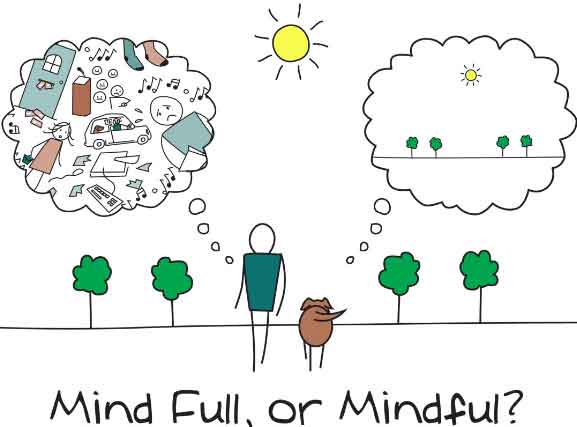
You may have already been practicing mindfulness without even knowing it!

Have you ever caught yourself bombarded by negative thoughts or bogged down in negativity and reminded yourself to take a step back, so you could think about think about the situation more objectively and with a level head?  You were being mindful.

Have you ever been in a relaxing atmosphere (e.g., the beach or a massage) and still had a million thoughts racing through your mind? Have you then reminded yourself to put those thoughts aside and focus on enjoying the atmosphere or experience? You were being mindful.

Have you ever been overwhelmed with tasks to the point of it affecting your concentration or performance, so you forced yourself to focus on one task at a time?  You were being mindful.

Have you ever encouraged your child to sit down and take a break when they were getting overly rambunctious or worked up? You were encouraging your child to be mindful.
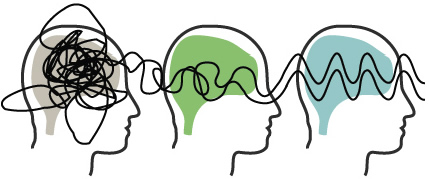
Any time you are taking a conscious approach to your work, parenting, emotions, or relationships, you are living mindfully. 

How Do We Explain Mindfulness to Children?

We like the concept of clear brain vs. cloudy brain for explaining mindfulness to children. When you are in clear brain, you are focused, calm, and in control of your thoughts and feelings. When you are in cloudy brain, there is a lot of noise in your brain. You may be upset, distracted, worried, or not thinking clearly. This concept could be further illustrated with glitter bottles or snow globes. When the bottle is shook up, it’s hard to see through the bottle (cloudy brain). When the contents have settled, you can see clearly (clear brain). Have the child physically look at objects through the bottle when it is shook up and settled and notice the differences. The concept of clear and cloudy brain could also be extended to the Zones of Regulation, an intervention program used throughout Bridgeway Academy. Cloudy brain represents blue, yellow, or red zones. Mindfulness techniques are a tool to help get oneself back to the green zone.

 Incorporating Mindfulness into Daily Life:

There are simple exercises that you can do with your child and steps you can take to help your child and family adopt a more mindful lifestyle. As with most things, children learn best when you participate with them and model the behavior you want them to cultivate. 

Simple Mindfulness Exercises:

  • Being a Detective: Guide your child in noticing things in their environment. Encourage them to engage each of their senses by noticing things that they see, hear, taste, feel, and smell. You can also turn this into an I Spy game where one person give clues about sensations in their environment, and the other guesses what they are observing.
  • Candle Breathing: Have your child pretend to blow out candles on their fingers by taking slow, deep breaths. Each finger represents one candle.
  • Happy Place: Guide your child in visualizing their “happy place,” which is a place, activity, or memory that brings up feelings of wellbeing (e.g. going to the park or opening up presents). Help your child to draw and/or verbally describe their happy place, by relating it back to each of their senses (e.g., “I hear other kids laughing while playing and feel the swing on my legs”).
  • Glitter Bottle: Create a glitter bottle with your child (e.g., see http://blog.theautismsite.com/diy-sensory-bottles/). Have your child shake it up and then focus their attention on watching the glitter settle.

Mindful Living:

  • Minimize Distractions: As a family, put aside distractions and practice focusing on one task at a time. For example, when eating dinner, don’t multi-task or use electronics. When playing, engage in one activity or play with one toy at a time.
  • Practice Patience and Acceptance: Work on accepting the idea that problems sometimes take some time to resolve, no one is perfect, and difficult feelings are a normal part of life. Give yourself and your kids grace in your everyday experiences and accept imperfection. Model this internal dialogue for your child by talking out kid-friendly problems. Show that you can bounce back from problems and that tricky feelings will eventually pass.
  • Create Breathing Space: When you feel like your emotions are in control (i.e., cloudy brain), or when you observe this happening with your child, take a break by taking some breaths or by temporarily engaging in another activity. When you or your child has regained composure (i.e., returned to clear brain), then you can deal with the problem at hand with a more level-headed perspective. It’s okay to say to your child, “My feelings are in control or I’m in cloudy brain right now, so let’s go do something else and work this out later.”
  • Pay Attention to your Body: Emotions and behavior are easily influenced by physiological needs. When your child is upset or unfocused, guide him or her in noticing basic sensations such as whether their body is hungry, tired, too hot/cold, uncomfortable from something they are wearing, hurt/not feeling well, or if they need to take a break from what they are doing to use the bathroom.

ABA principles, such as modeling, prompting, and reinforcement can be used to encourage children to be more mindful of their thoughts and behaviors on a daily basis.  Additionally, many mindfulness strategies can be adapted to children with more limited language skills through methods such as visual prompts and schedules.  Talk to your child’s psychologist or program and behavior specialist for ideas on how to teach and reinforce these skills. Your child’s OT may also advise on sensory strategies that can be incorporated into a mindfulness practice.
 RESOURCES:

  • mindful.org
  • pocketmindfulness.com
  • Mindfulness Skills for Kids and Teens (Burdick)
Written by alex · Categorized: Uncategorized

Jan 06 2017

Sprucing Up for the New Year!

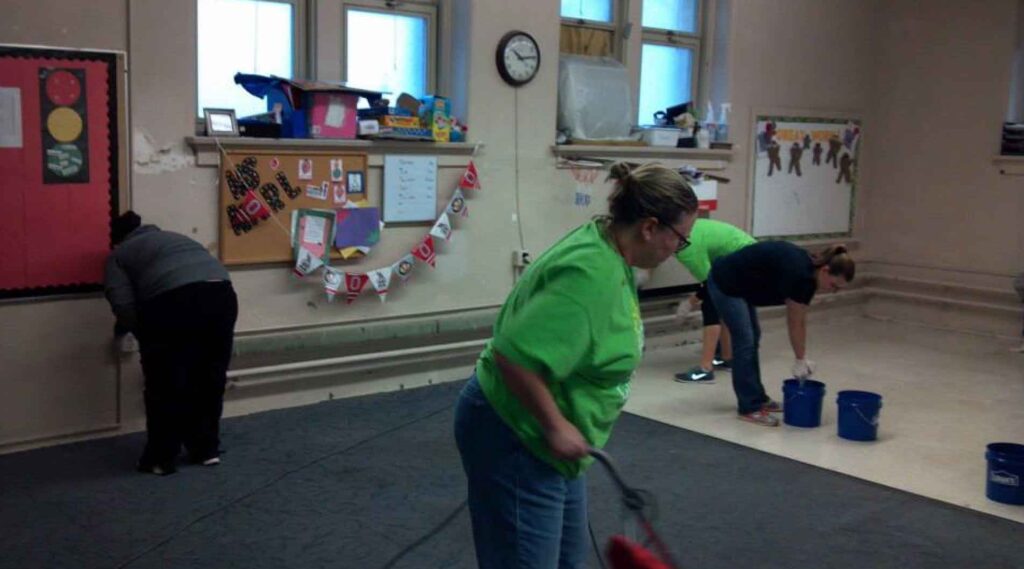
The new year brings with it cold weather and long, dark nights. But at Bridgeway Academy, we feel the warmth and light of our community on “Spruce it Up Day,” which occurs annually on the Martin Luther King Jr. holiday. The Martin Luther King Jr. Day of Service in Central Ohio is designed to empower volunteers, strengthen communities, bridge barriers and create solutions to social problems. Volunteers are encouraged to share their time and talents in support of local charitable organizations such as Bridgeway Academy.

This year, Martin Luther King, Jr. Day is Monday, January 16, 2017 and Bridgeway Academy will welcome community volunteers to paint, deep clean and participate in light construction activities throughout the facility.  “We love Spruce it Up Day,” states Bridgeway Academy Co-Founder Erin Nealy. “We meet many new people while welcoming back old friends who are truly interested in making a difference for Bridgeway Academy, its students, staff and programs.”


“We meet so many new people and welcome back old friends who are truly interested in making a difference for Bridgeway Academy, its students, staff and programs”, states Bridgeway Academy Co-Founder Erin Nealy.

Bridgeway Academy welcomes individuals or groups of volunteers, but asks that volunteers be ages 14 and above. To sign-up for Spruce it Up Day, visit our listing on Volunteer Match, http://www.volunteermatch.org/search/opp2544489.jsp. We have already heard from our friends at DSW and Americorps. We hope that you’ll spend the morning with us too, and make areal  difference for the students and staff of Bridgeway Academy.

Written by alex · Categorized: Uncategorized

Dec 05 2016

The Holidays – therapy-style

Bridgeway Academy has over thirty (30) licensed professionals in its Music, Occupational, Physical, and Speech Therapy departments. This holiday season, they are providing great ideas for holiday gifts that also meet therapeutic goals and most are available to purchase through the AmazonSmile program – where your purchase will also give back to Bridgeway Academy (http://tinyurl.com/jme52kl). Check out the lists and happy holidays from everyone at Bridgeway Academy.

Music Therapy
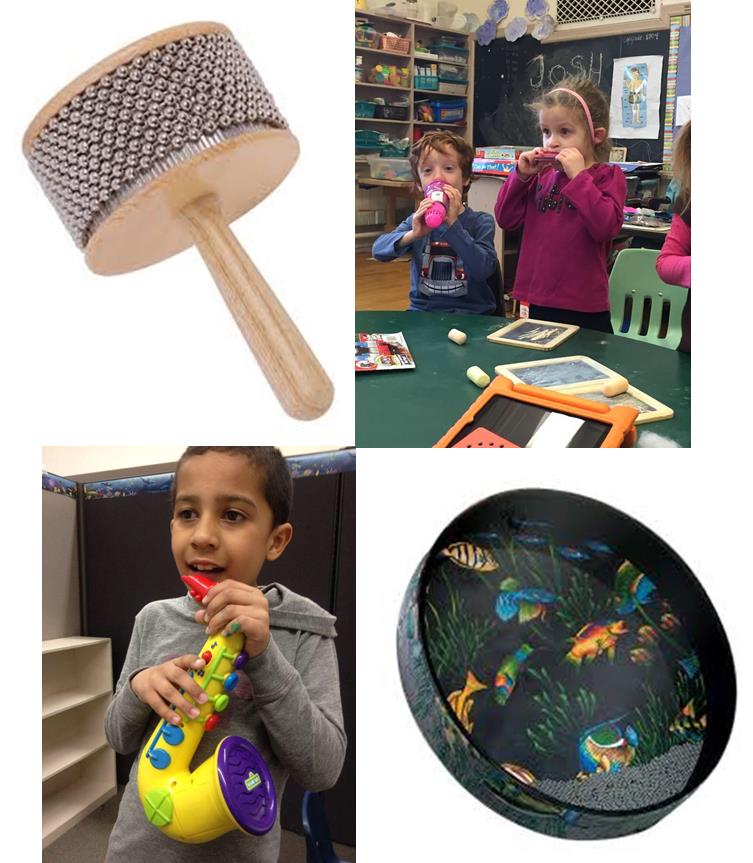
Music tends to be a strong interest for all children, and kids at Bridgeway Academy are no exception. Here are some ideas for gifts that will engage students and support music therapy activities.

  1. A Cabasa is great for using 2 hands and getting a lot of sensory input. You can roll it on various body parts to work on body awareness and even use it for massage. http://tinyurl.com/z7lxlg8
  2. The REMO kid’s floor tom is a freestanding drum and can be used to work on grasping mallets with two-hands to play in unison or alternating patterns. We also use it to work on playing a steady beat with others or call and response patterns/turn taking.  http://tinyurl.com/ht2usb6
  3. The ocean drum provides a lot of visual input and auditory feedback as well as the other benefits of the floor tom. http://tinyurl.com/jn45syb
  4. Resonator bells can be used for color or letter ID and hand-eye coordination. http://tinyurl.com/hzemrcd
  5. Laurie Berkner CDs are always a “go to” because of her great use of music to support movement. http://tinyurl.com/ztknlxc

Occupational Therapy
Occupational Therapy encompasses so many areas of development because occupation is everything we do every day.  It accounts for fine motor, sensory, play and independence.  Here are some gift ideas to develop skills while making it fun and playful.

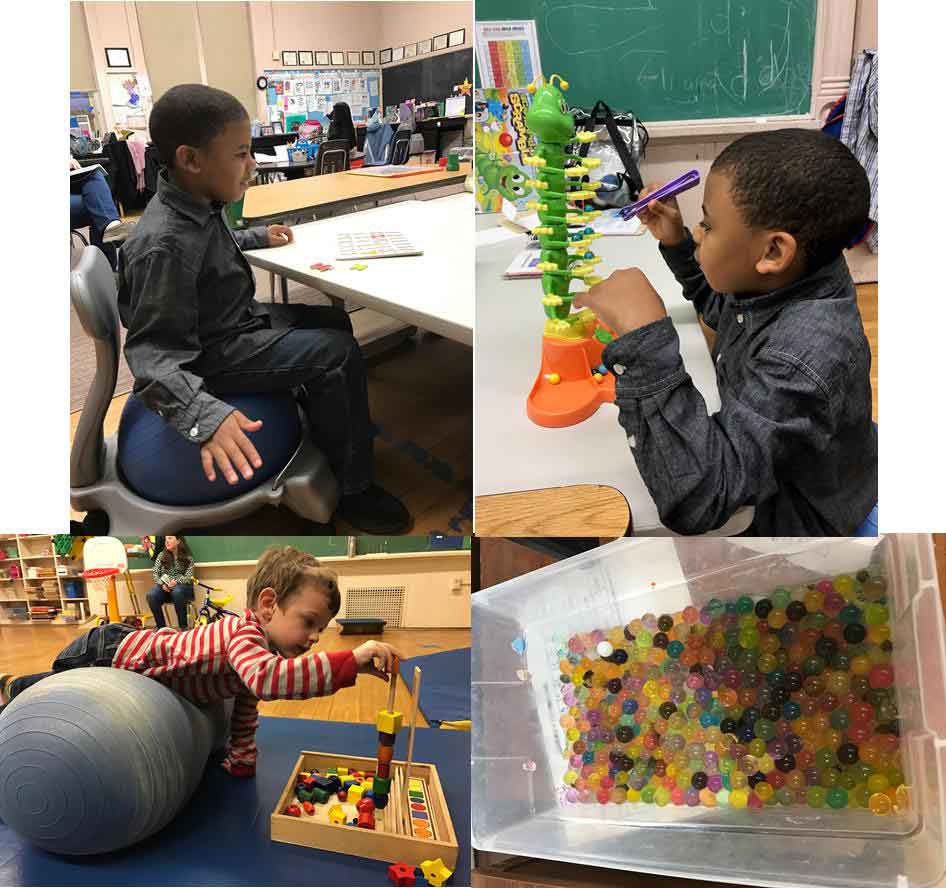
  1. Giggle Wiggle or Scatterpillar Scramble: This game is so fun for kids.  The caterpillar dances and plays music.  Often during therapy, we turn him off while we pick a marble then turn him back on to dance between players.  It makes it a little easier and fun for kids. http://tinyurl.com/zue4qqh
  2. Lacing cards: Lacing develops bilateral skills necessary for more complicated activities such as buttoning and zipping coats.  These cards often come in fun shapes and pictures. http://tinyurl.com/jckuey7
  3. Therapy ball: Often students need movement to stay focused.  A way to help with homework or studying is having kids sit on a therapy ball at home while learning.  Kids can bounce or roll prone over a ball while watching TV.  They may be getting exercise without knowing it.  http://tinyurl.com/j6qk5n4
  4. Shape sorter: Sorting shapes develops visual motor skills as well as bilateral skills. Kids must turn and rotate the box to find the correct shape and turn the block to fit into the hole.  There are several different types of sorters with a variety of colors and shapes. http://tinyurl.com/hr9ryh5
  5. Aquabeads: Aquabeads are similar to Perler beads but you only spray with water instead of getting the hot iron out.  There are so many kits to choose or you can make your own designs.  This is recommended for ages 4+ however I would probably purchase for 7-8 or older because it is a challenge for fine motor skills. http://tinyurl.com/zmhoro3
  6. Make your own Sensory Bin: Fill the container with water beads and water over night. They will grow into soft, bouncy balls.  Kids love to put their hands or feet into the container.  This is good for relaxing or alerting.  The best thing is to know your kids.  If water beads are not their favorite, try dry rice.  Hide small toys and have kids find them or add letters or numbers for more academic skills.
    Orbeez or water beads: http://tinyurl.com/jlqabtjSterilite container: http://tinyurl.com/z3ld7ho
  7. Play-Doh: Play-Doh develops hand strength while playing and developing imagination.  It is great because there are so many different play sets and colors of Play-doh.  http://tinyurl.com/h5c3nfs
  8. Legos: Legos are again wonderful for fine motor skills.  This builds children’s imagination while playing.  Legos often come with step by step directions for specific kits.  This challenges students to visually find the correct pieces, sequence steps and build.  http://tinyurl.com/hbyzfw9
  9. Jenga: This game is great for coordination and slow, precise movements. This is recommended for kids 6+ but as an adult, it’s a challenge.
    http://tinyurl.com/hwd8g3e

Physical Therapy
Gross motor development goes beyond running and jumping. Aspects of gross motor development include: strengthening, balance and coordination and all can be addressed and improved via play. In the winter months, it can be challenging to promote gross motor skills indoors. Here are some great gift suggestions that will make your kids happy and improve gross motor development at home. Happy Shopping!

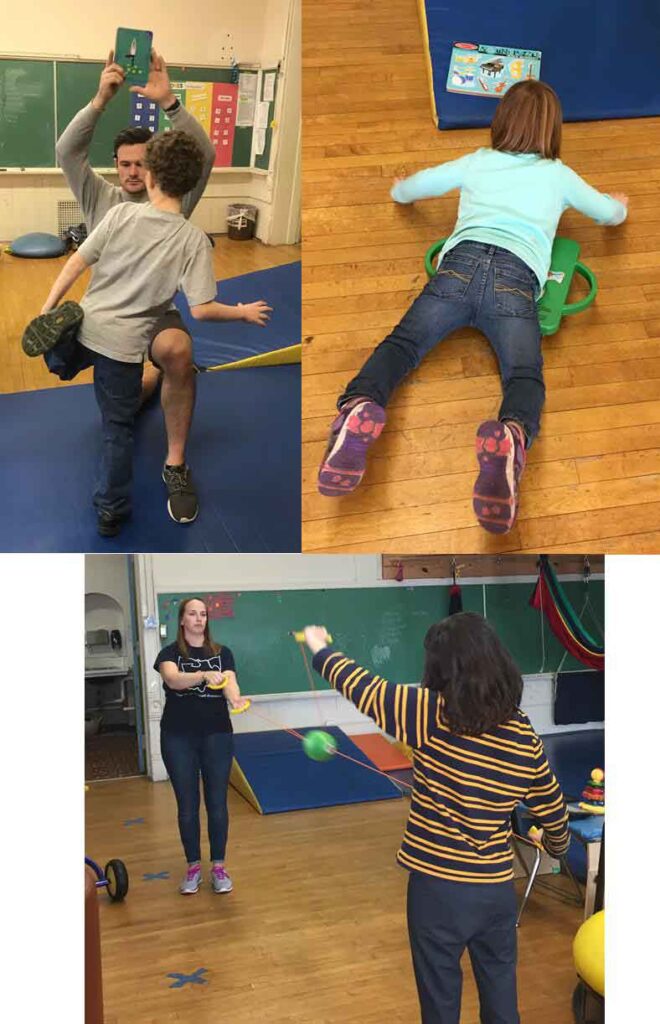
  1. Scooter boards are great for developing core and upper extremity strength. You can either ride it on your stomach using your hands to propel the board; or, you can sit on it and use your feet. Increase the difficulty by trying to follow a designated path or carrying objects on the board. https://smile.amazon.com/ (This is just one example; there are a variety of colors/sizes available)
  2. Zoom ball is a great bilateral coordination activity that requires you use both arms together. You can increase the difficulty by doing it in sitting, standing, standing on 1 foot, etc. https://smile.amazon.com/
  3. Nobbie Gertie Ball is a variation of a playground ball with great texture and is lightweight for the child who is just learning to catch or craves texture sensory input. https://smile.amazon.com/
  4. Yoga Pretzel Cards are great for working on gross motor imitation. They come with a variety of built in games including partner games. https://smile.amazon.com/
  5. Melissa and Doug sound puzzles offer are a variety of different puzzles including: music, animals, vehicles. These puzzles are very popular with our students and are a great way to work on various postures including: laying prone on elbows, tailor sitting on the floor (criss-cross) or kneeling. https://smile.amazon.com
  6. Tunnels are a great way to promote bilateral coordination by crawling on all fours. You can add variety to it by crawling through on your knees, stomach, crab walk, etc. or by using it along with other objects around the house as part of an obstacle course.  https://smile.amazon.com/ (This is just one example; there are a variety of colors/sizes available).

Speech Therapy
Communication skills vary greatly across the lifespan.  Whether your child is an early communicator, learning to use an AAC system or working on conversational skills, there are many activities you can do at home to facilitate communication!  A few strategies to keep in mind, without having to buy materials, are to give wait time, be a good language model and ask more open-ended questions. Celebrate communicative attempts and successes with your child!  If you’re looking for gift ideas to promote communication, see our list below!

  1. Ball Poppers (many fun/cute styles) For an added bonus, take the balls out and put the bubble wand over the ball popper air to make a ton of bubbles!
    https://smile.amazon.com/Playskool-Explore-Grow-Busy-Popper/dp/B00U5U5VWM/ref=sr_1_1?s=toys-and-games&ie=UTF8&qid=1480363412&sr=1-1&keywords=Ball+Popper
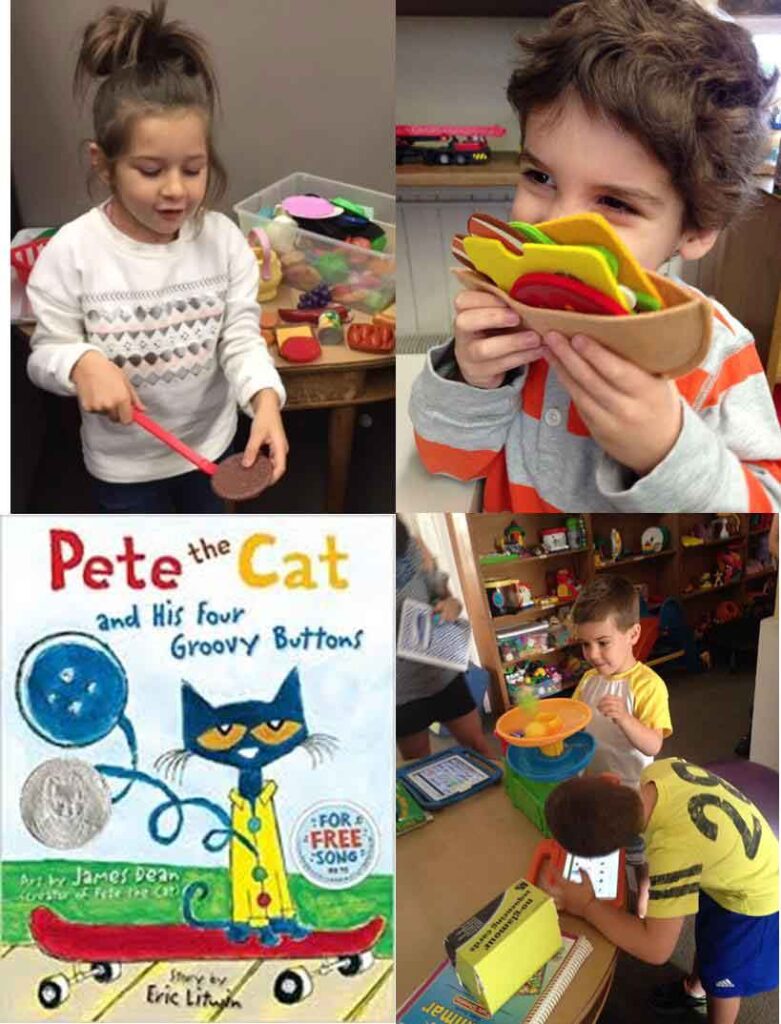
  1. Pretend play – food/microwave https://smile.amazon.com/Melissa-Doug-Food-Groups-Hand-Painted/dp/B0000BX8MA/ref=sr_1_1?s=toys-and-games&ie=UTF8&qid=1480363946&sr=1-1&keywords=Melissa+and+Doug+food
  2. Bubbles (any brand will do, but our favorite is Gazillion Bubbles!) https://smile.amazon.com/Gazillion-35300-Solution-Novelty-Pack/dp/B0104B1J2C/ref=sr_1_3?ie=UTF8&qid=1480363331&sr=8-3&keywords=gazillion+bubbles
  3. Pop Toobs https://smile.amazon.com/Toob-Colors-Vary-Poof-Slinky/dp/B0052GOJ1S/ref=sr_1_1?s=toys-and-games&ie=UTF8&qid=1480363546&sr=1-1&keywords=Pop+tubes
  4. Books! Reading is so essential!  There are too many great books to list them all, but here are a few of our favorites:Tap The Magic Tree https://smile.amazon.com/Tap-Magic-Tree-Christie-Matheson/dp/0062274457/ref=sr_1_1?ie=UTF8&qid=1480364449&sr=8-1&keywords=tap+the+magic+tree     Press Herehttps://smile.amazon.com/Press-Here-Herve-Tullet/dp/0811879542/ref=sr_1_1?ie=UTF8&qid=1480363720&sr=8-1&keywords=Press+HereThe Book With No Pictures

    https://smile.amazon.com/Book-No-Pictures-B-J-Novak/dp/0803741715/ref=sr_1_1?ie=UTF8&qid=1480363749&sr=8-1&keywords=The+Book+with+no+pictures

    Pete the Cat (various)

    https://smile.amazon.com/s/ref=nb_sb_ss_c_1_5?url=search-alias%3Daps&field-keywords=pete+the+cat&sprefix=Pete+%2Caps%2C147&crid=J0M1I59LB7RD

  5. Pop the pighttps://smile.amazon.com/Pop-Pig-Game-Improved-Belly-Busting/dp/B00CYQ24QG/ref=sr_1_1?s=toys-and-games&ie=UTF8&qid=1480364659&sr=1-1&keywords=Pop+the+Pig
  6. Instrumentshttps://smile.amazon.com/Innocheer-Musical-Instruments-Percussion-Rhythm/dp/B01L6ZMVYU/ref=sr_1_6?s=toys-and-games&ie=UTF8&qid=1480363989&sr=1-6&keywords=children%27s+instruments
  7. Puppetshttps://smile.amazon.com/Melissa-Doug-Farm-Friends-Puppets/dp/B00JBIY0MG/ref=sr_1_4?s=toys-and-games&ie=UTF8&qid=1480364021&sr=1-4&keywords=puppets

Bridgeway Academy is a Columbus, OH non-profit organization with a mission to meet the educational and therapeutic needs of children with autism and other developmental disabilities. If you are looking for a classroom, therapy department or teacher gift this holiday season, be sure to check out the organization’s Wish List or make a donation to the organization’s annual fund campaign. All document in-kind and cash contributions are tax-deductible to the extent allowed by law.

Written by alex · Categorized: Uncategorized

Oct 27 2016

Bridgeway Academy’s Speech Therapy Department is Headed to ASHA!

The American Speech-Language Hearing Association (ASHA) is the national professional scientific and credentialing association for speech pathologists and audiologists (http://www.asha.org/). The organization’s annual national conference draws over 12,000 attendees to learn about the latest research and resources to advance their skills and careers. This year’s conference will be November 17 – 19, 2016 in Philadelphia, PA and will have Bridgeway Academy’s first delegates in attendance as presenters.

Bridgeway Academy’s Co-Founder/Co-Executive Director Abigail S. David, M.S. CCC-SLP, Therapy Manager Lindsey Paden Cargill, M.A., CCC-SLP, and Speech Department Supervisor Samantha Lyle, M.A., CCC-SLP have been collaborating with researchers at The Ohio State University’s Autism and Child Language Learning Laboratory to examine several topics relating to the use of the Language Acquisition through Motor Planning (LAMP) program that is used at Bridgeway Academy.

As one of only eight LAMP Centers of Excellence in the country, Bridgeway Academy values its role as a pioneer in the field of augmentative and alternative communication use for children on the autism spectrum and is proud of the opportunity to share this work with our academic community and our constituency.

During the summer of 2016, an immersive LAMP class was piloted at Bridgeway Academy that emphasized large group language modeling, core vocabulary instruction, social interaction and sensory exploration. The language skills of eight participants were examined before, during and after the class. The findings of this study will be discussed at a poster presentation titled “Vocabulary Development in School-Age Augmentative & Alternative Communication (AAC) Users” at the ASHA convention.

A platform presentation will also be presented by the Bridgeway Academy therapists and the OSU researchers. “Predictors of Augmentative & Alternative Communication in AAC Users,” will highlight findings of another study completed this year. This study looks at correlations between students’ language outcomes and the operational and therapeutic competencies of their teachers and parents.

Once the findings of both studies are presented at ASHA, Bridgeway Academy will continue its partnership with The Ohio State University to document and publish these findings as well as share the results with our broader community.

Written by alex · Categorized: Uncategorized

Oct 12 2016

Halloween!

Halloween is just around the corner!  As with any holiday, the changes in routine, environment and expectations can be challenging for everyone.  Managing the excitement and potential stress surrounding these changes with some basic strategies can assist with making the holiday a success!

Halloween presents a unique set of challenges for kids.  These challenges can include the subject matter (too scary), the costume (sensory), and the unusual expectation that for one day only, we encourage our children to knock on stranger’s doors, and then ask them for candy!  We at Bridgeway Academy have compiled some helpful hints and activities to prepare for and manage some of the more difficult aspects of Halloween.

Practice, Practice Practice!

Taking the unexpected and making it routine can reduce the likelihood that your child will react negatively to the new expectations of the holiday.

  1. Have your child practice wearing their costume, or parts of their costume. This will allow for some time to ease into the feel of new, or unusual materials. If a costume is out of the question, a silly hat, or t-shirt with a favorite character can work just as well!
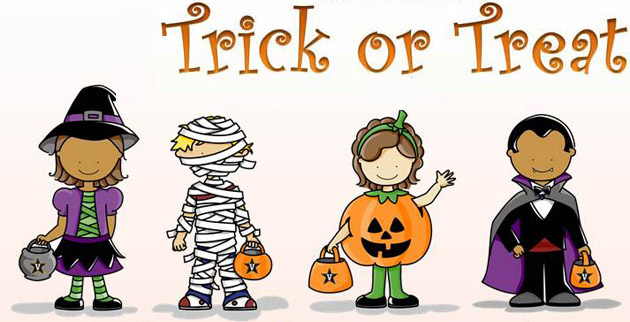
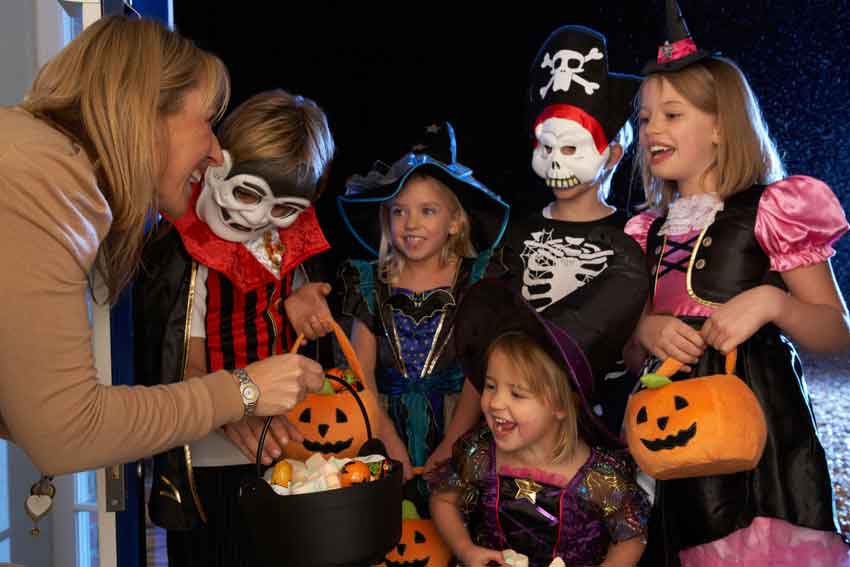
  2. Encourage family members to play “pretend” Halloween. Stand outside your own front door with your child and have them practice knocking on the front door. When a familiar family member opens the door, have the child practice saying “trick-or-treat” and then give them a piece of candy and lots of praise! If verbally saying “trick or treat” is a challenge for your child, try having them exchange a printed card with the words “trick or treat” for their Halloween candy.
  3. Once your child has mastered knocking on your front door, try practicing in the same way with a willing neighbor. This practice will allow your child to develop clear expectations associated with trick-or treating on Halloween.
  4. Use a social story to explain how Halloween is different than other days. We spend countless hours teaching our kids to never EVER take candy from strangers, and one day a year, we expect them to do just that, over, and over, and over! A social story can help to explain this difference using pictures and clear, concise language.  Here is a link to help you get started http:/adayinourshoes.com/printable-halloween-social-stories-kids-with-autism/
  5. SO MUCH CANDY!!!! If your child has allergies or dietary restrictions (or you just don’t want the sugar), try purchasing a favorite toy ahead of time for your child to trade for their candy.
  6. If the mere thought of running around in the dark among large groups of children dressed up in costumes is too overwhelming, consider staying at home to pass out candy. This is a great way to introduce a child to the concept of Halloween and trick or treating, while providing them a familiar and safe place to take a break when needed.
  7. Lastly, remember that the most important thing about Halloween is to have FUN!

Bridgeway Academy annually hosts “Practice Trick-or-Treat” to provide opportunities for students to trick-or-treat and participate in traditional Halloween activities (e.g. Haunted Speech Room) in a fun, safe and familiar environment. The 2017 event will take place on Thursday, October 27, 2016 from 4:30 – 6:00pm. Families and friends are invited to dress-up and join us at Practice Trick or Treat. We’ll see you there!

Written by alex · Categorized: Uncategorized

  • « Go to Previous Page
  • Page 1
  • Interim pages omitted …
  • Page 5
  • Page 6
  • Page 7
  • Page 8
  • Page 9
  • Page 10
  • Go to Next Page »

Bridgeway Academy
1350 Alum Creek Drive
Columbus, OH 43209
614.262.7520

Privacy Policy

Equal Opportunity Employer City of Columbus Franklin County Board of Commissioners

Donate Now
Facebook Link Instagram Link Twitter Link Youtube Link LinkedIn Link
The Yass Prize